Talk Isn’t Cheap: The Nobel Prize, the Fed and the Power of a Promise
Talk Isn’t Cheap: The Nobel Prize, the Fed and the Power of a Promise
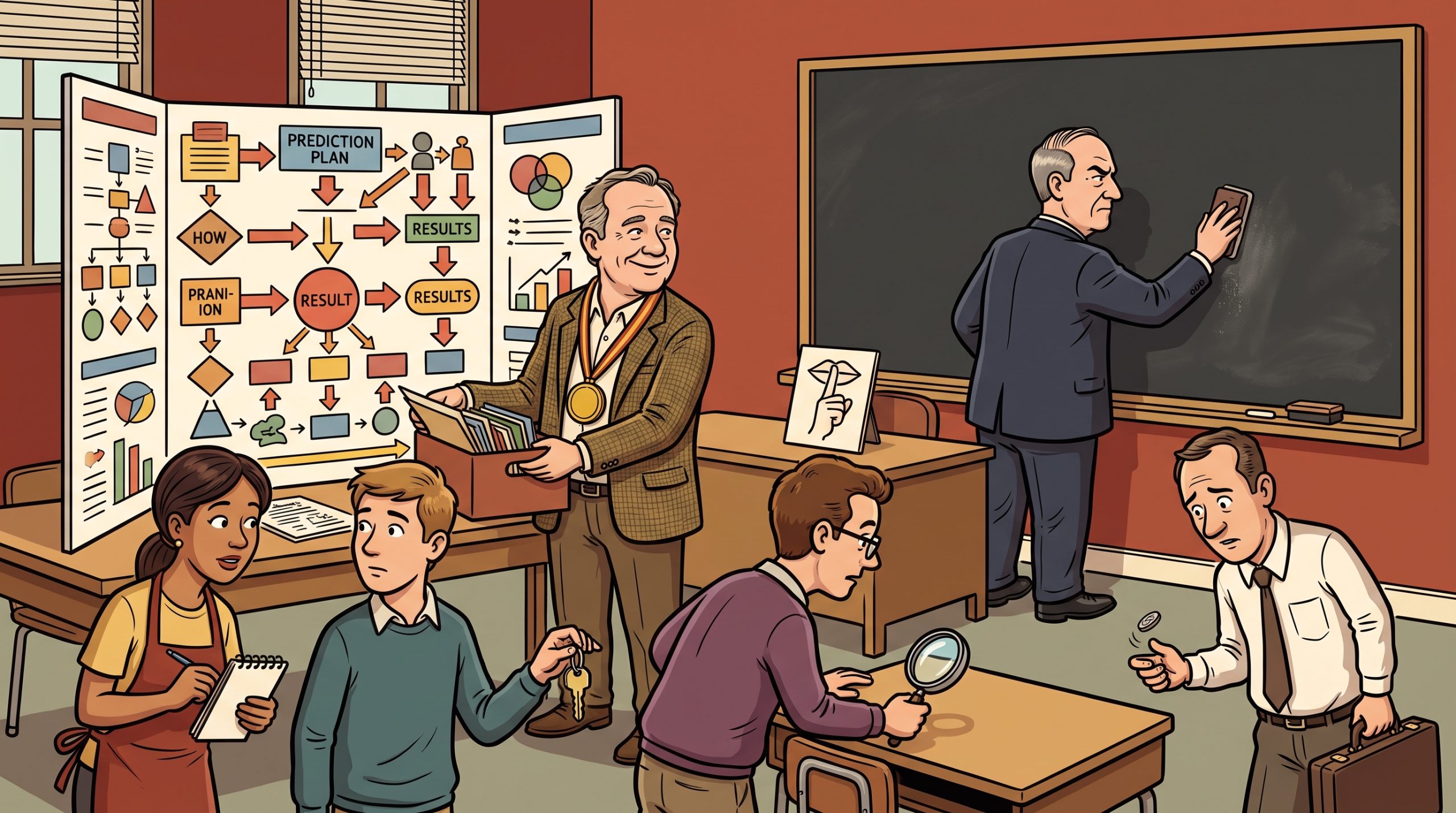
Imagine your landlord tells you today that your rent will go up 10% next year. Nothing in your bank account has changed yet, but you’ve probably started cutting back already: fewer dinners out, the holiday pushed back a few months. A promise about tomorrow has changed what you do today.
That, in one paragraph, is what this year’s Nobel Prize in economics is about. On October 12, the prize went to two American economists, Robert Hall of Stanford University and Michael Woodford of Columbia University.
They showed how our expectations about the future drive the economy in the present, and how governments and central banks can use that to soften booms and busts.
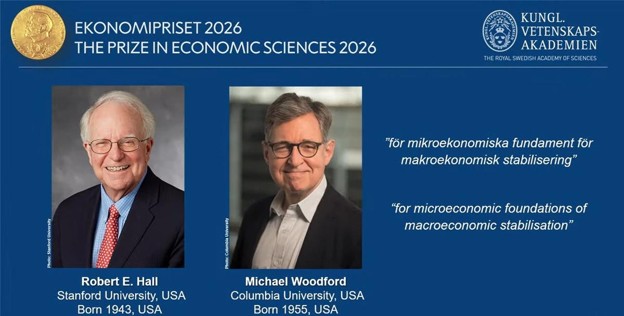
Source: The Hindu
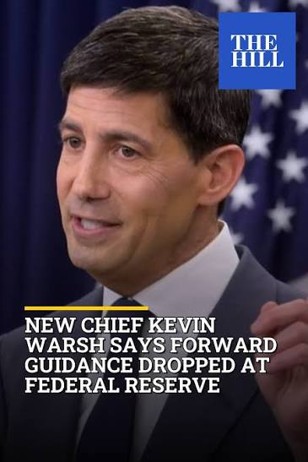
The timing could hardly be more ironic. Woodford’s best-known idea is that central banks should explain how they think and what they plan to do. In the same year his work won the prize, U.S. Federal Reserve chair Kevin Warsh stopped doing exactly that. “I’m not in the forward guidance business,” he told reporters.
Is the Fed throwing away a Nobel-winning idea? Warsh has his reasons, and they deserve a hearing. But by the laureate’s own standard, the Fed hasn’t just gone quiet. It has yet to replace what it took away.
Start with people, not statistics
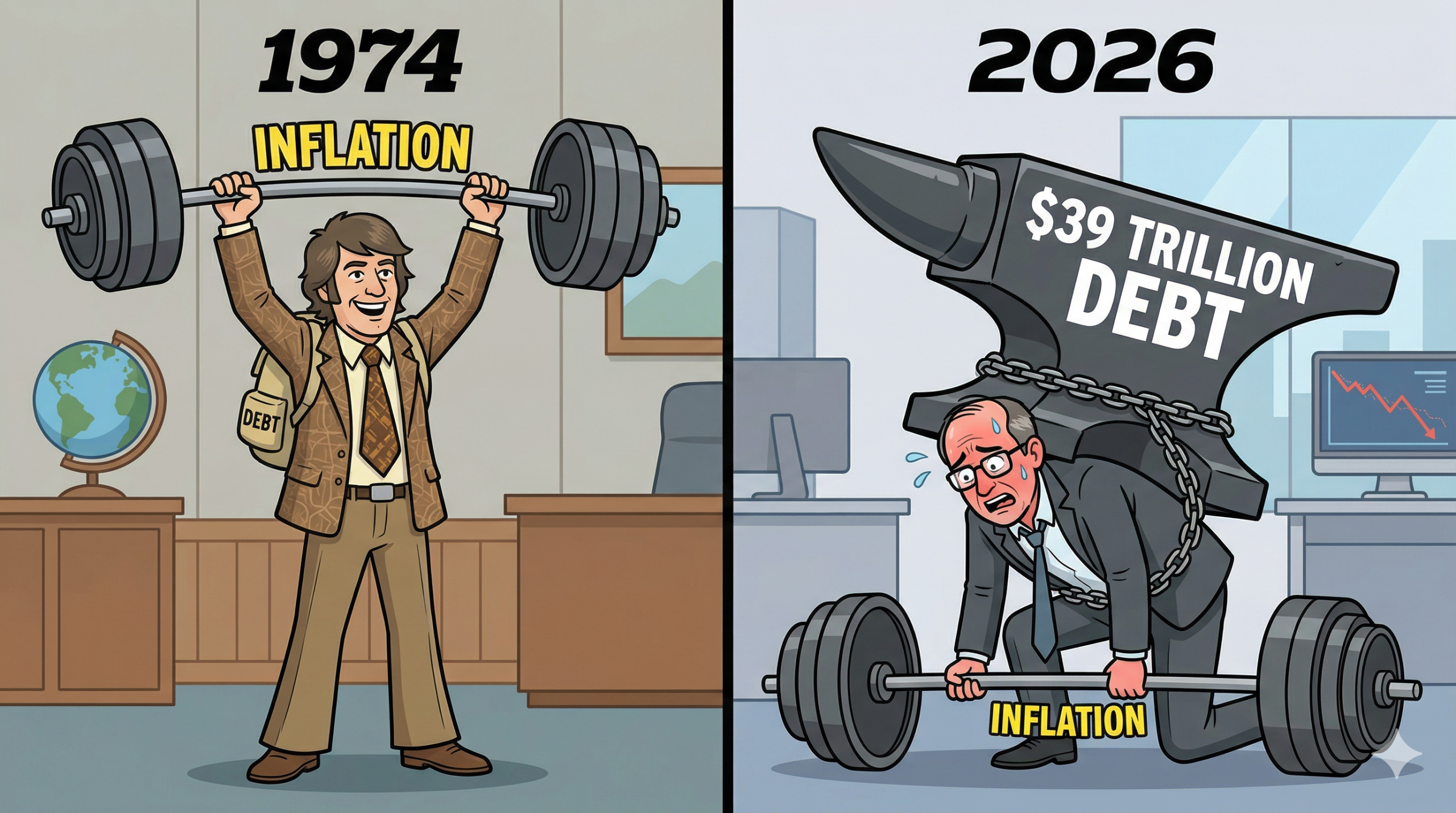
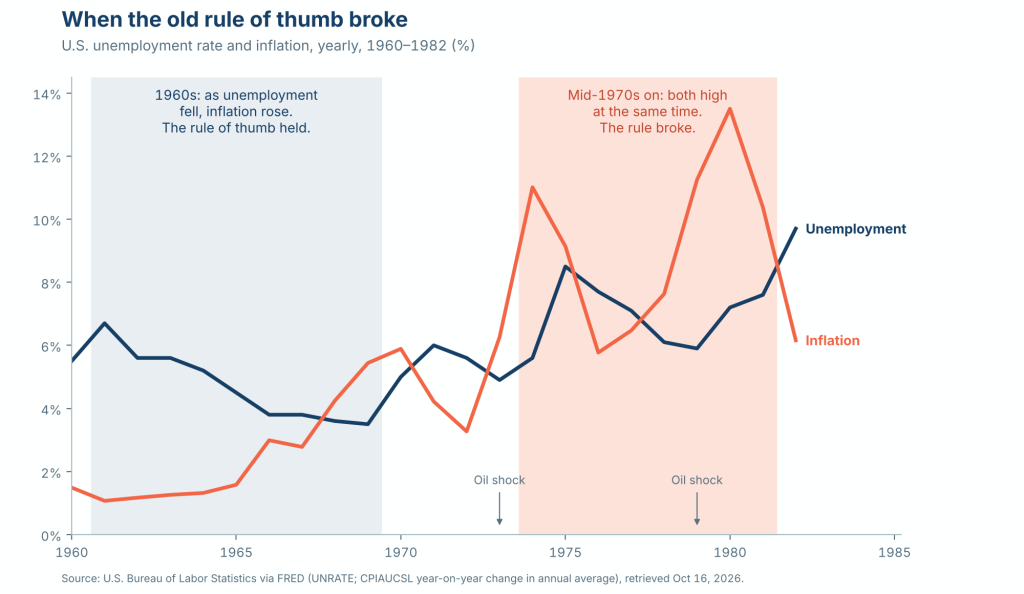
Before the 1970s, policymakers steered the economy with rules of thumb drawn from past data, such as the idea that a little more inflation buys a little less unemployment. Then the oil shocks of the 1970s delivered high inflation and high unemployment at the same time, and the rules stopped working. As a member of the prize committee put it at the announcement, the old recipe “worked well — until it didn’t.”
Hall and Woodford rebuilt the thinking from the ground up. Instead of asking how the statistics moved together, they asked what real households and businesses decide, and why.
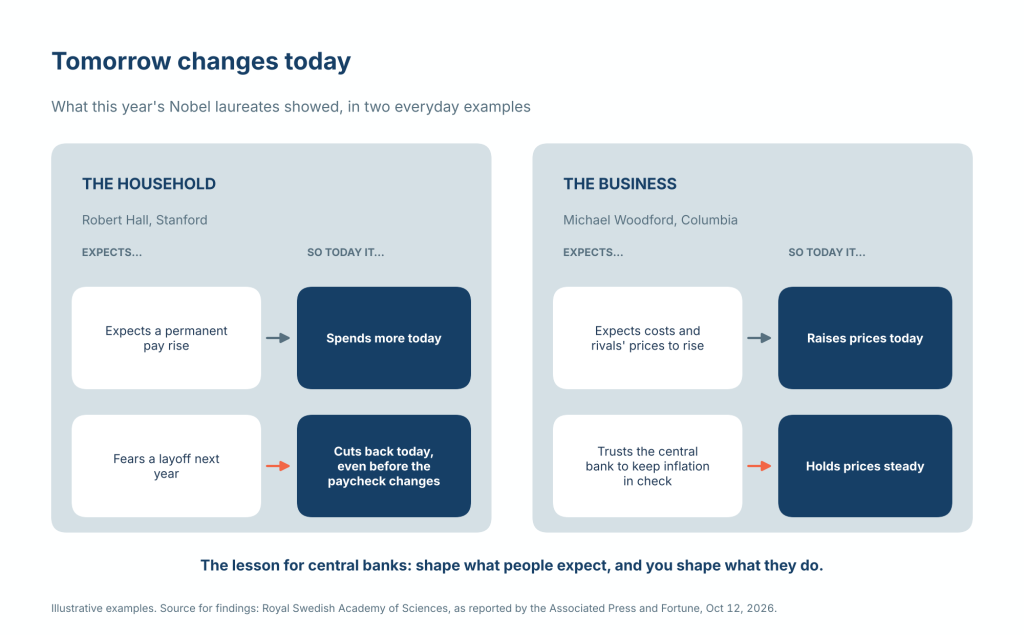
Hall looked at households. People spend according to what they expect to earn over time, which is why a permanent pay rise gets spent far more readily than a one-off bonus. Hall showed the catch: if spending already reflects expectations, it only shifts when news surprises us, which makes it very hard to forecast.
Woodford looked at businesses.
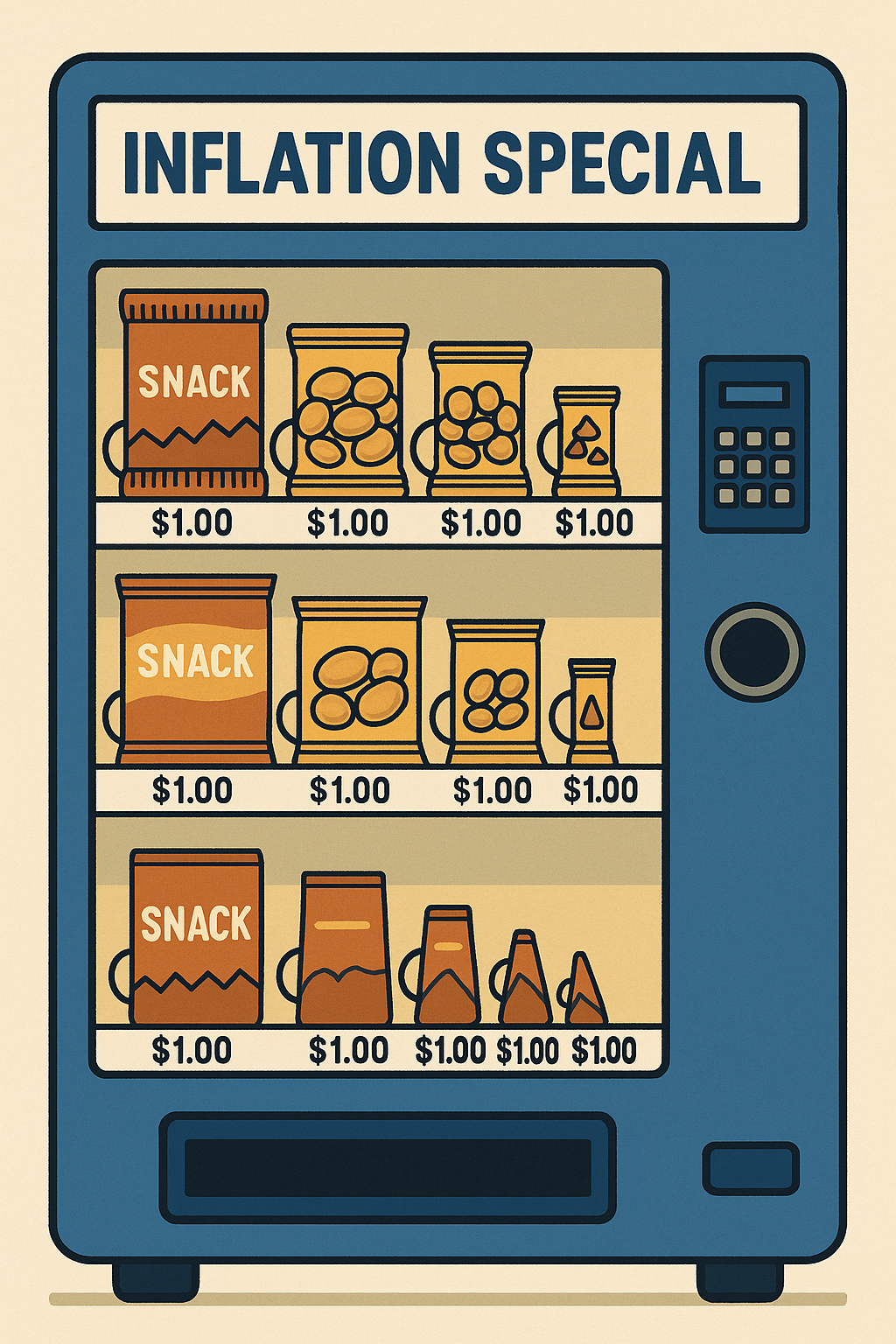
Picture a café owner who reprints her menu once a year. If she expects milk, rent and her rivals’ prices to rise next year, she raises her prices now, before those costs arrive. Multiply her by millions of businesses and expected inflation turns into real inflation.
Now flip it around. If she trusts that the central bank will keep inflation in check, she has no reason to raise prices early. That’s why, in the committee’s words, central banks should offer “clear and credible communication about how they reason and what they plan to do.”
How a promise moves your mortgage
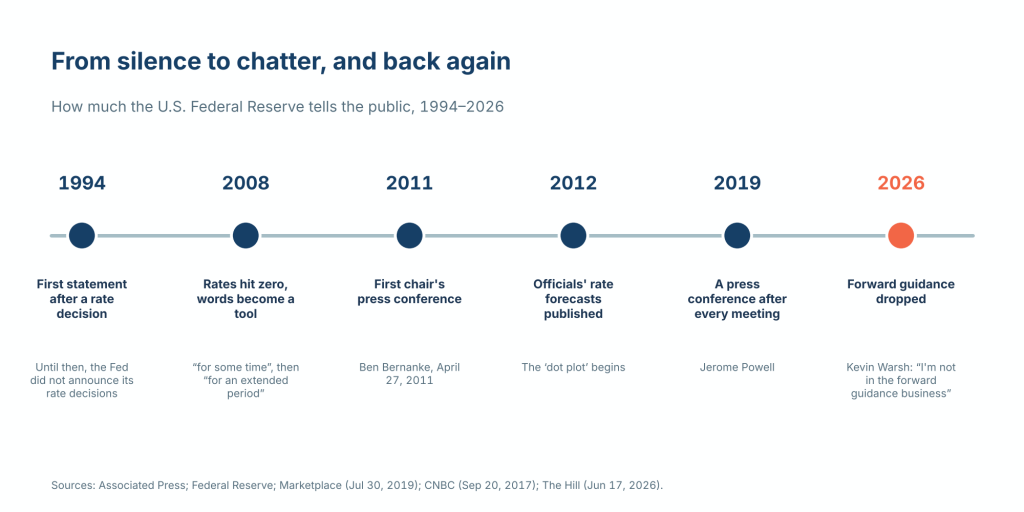
This is where it reaches your wallet. Mortgages and business loans are largely priced on where people expect the Fed’s rate to be over the next few years. So when the Fed cut rates to near zero in 2008 and couldn’t go lower, it used words instead, promising in 2011 to keep rates low “at least through mid-2013.” That’s forward guidance, and from then on the Fed only got chattier.
Why the new Fed chair might want to say less
Warsh, who took office on May 22, doesn’t argue that words are unimportant. His complaint is that they became too important. When the Fed hints at everything, investors stop thinking for themselves and simply repeat the Fed’s view back to it. “When all the financial markets are doing is reflecting back what we’ve said,” he said in June, “then we’re taking the most important source of information and we’re being blind to it.”
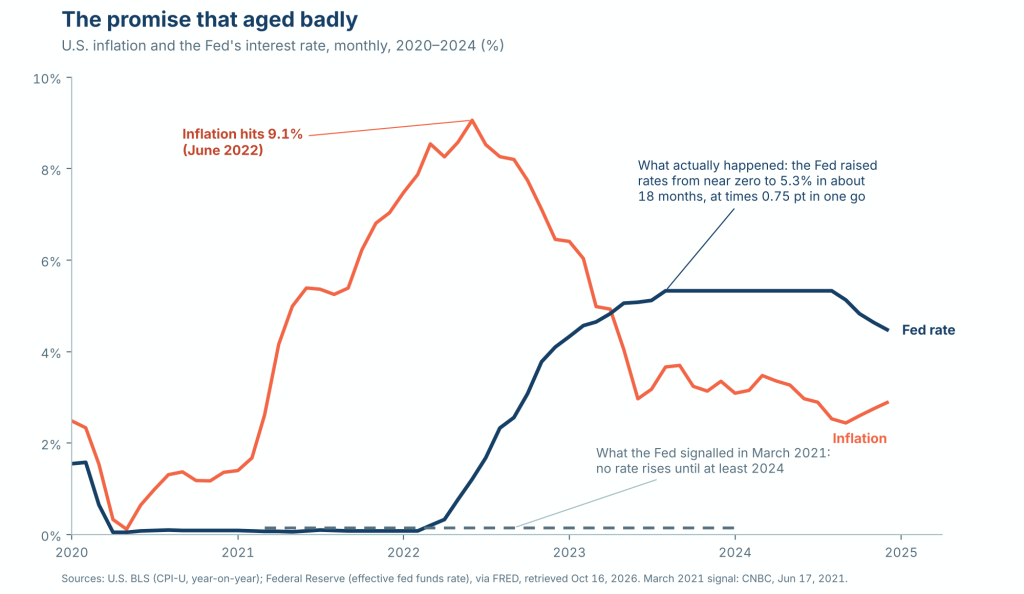
He also has a recent example to point to. In March 2021 the Fed called rising prices “transitory” and signalled no rate rises until at least 2024. By June 2022, U.S. consumer prices were up 9.1% from a year earlier, the biggest jump in four decades, and the Fed was raising rates three-quarters of a point at a time. Warsh told the U.S. Senate in April that the Fed’s forecasts from that period “compounded” its mistakes.
His argument is that once a central bank has told the world rates will stay low, it becomes slow to change its mind, and then has to catch up fast.
So Warsh has gone quiet. At his first meeting in June, the Fed’s statement shrank from 341 words to 132. He dropped the forward guidance and declined to add his own dot to the forecast chart. In September the Fed raised rates by a quarter point, to 3.75–4%, and Warsh gave no hint of what comes next.
Why the irony cuts deeper
There are really two kinds of promise a central bank can make. One is an itinerary, like the 2011 promise to keep rates low until at least mid-2013. The other is a rulebook, like the one the Fed switched to in December 2012: rates would stay near zero at least as long as unemployment stayed above 6.5% and inflation stayed under control.
Woodford himself preferred the rulebook. In a 2014 interview with the Minneapolis Fed, he called date-based promises “a less satisfactory way to try to shape expectations about future policy.” Warsh, for his part, says he wants to “look outside the window” rather than follow a script.
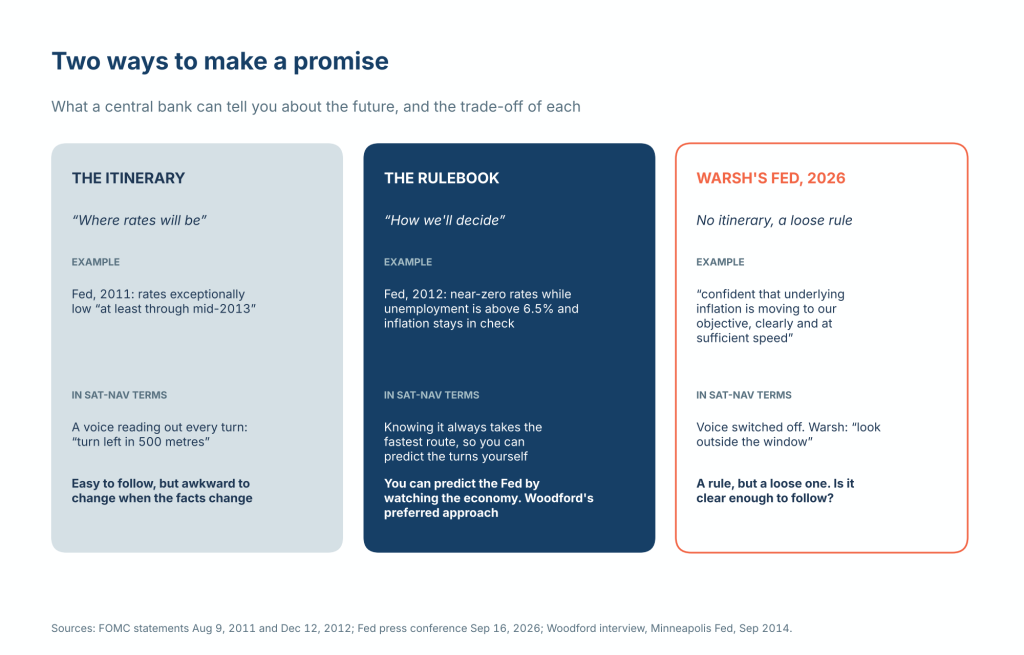
Warsh has torn up the itinerary. His rulebook, so far, is one sentence: the Fed must “be confident that underlying inflation is moving to our objective, clearly and at sufficient speed.” That’s a rule, but a loose one.
And if markets are meant to predict the Fed by watching the economy, they need to know which numbers matter. Yet Warsh told reporters in September, “I’m not a data-point-dependent guy,” adding that trends matter more. So what, exactly, should investors be watching?
Source: The Hill
Woodford was no fan of date-stamped promises either. The problem is that the Fed has dropped them without yet offering the clear rulebook he argued should take their place.
Our read: a bet on expectations with this little to anchor them is exactly the kind of gamble the prize-winning work suggests is risky.
So far, markets are making their own calls
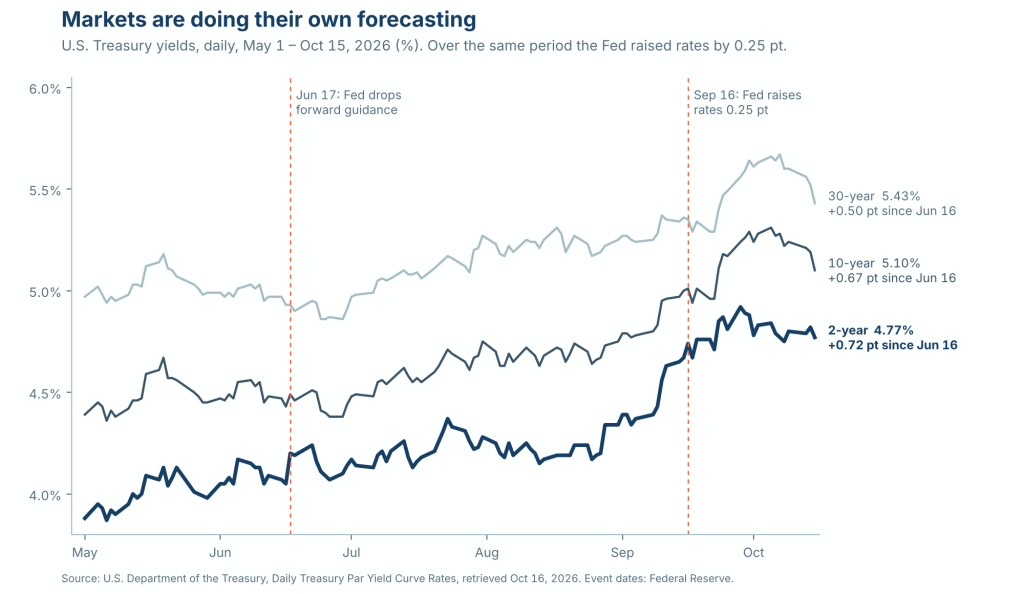
Without hints, markets do their own forecasting. The two-year U.S. Treasury yield, a good gauge of where investors think Fed rates are heading, rose from 4.05% on the eve of Warsh’s first decision to 4.77% by October 15, against a Fed that has hiked by just 0.25 percentage points. Investors are betting on more rate rises than the Fed has delivered.
Longer-term rates have climbed too: the 10-year yield, which most U.S. mortgage rates follow, is up about two-thirds of a point, and the 30-year about half a point. That is what critics of a quieter Fed warned about. Market strategist George Pearkes told the Associated Press that guidance had “served to suppress volatility and anchor market expectations,” and estimated that mortgage rates could end up about a quarter point higher without it.
But long-term rates also move with growth, inflation and government borrowing, and Warsh himself points to a stronger economy and more competition for capital.
Despite that, history suggests surprises are costly. When the Fed issued its very first post-meeting statement in February 1994, announcing a rate rise few expected, the Dow fell 2.4% that day. The real test, though, will be the next crisis, when rates may be near zero and words are the only tool left. Will a Fed that has trained everyone to expect silence be believed when it suddenly needs to speak?
The Fed’s communications review, due by year-end, will be the first clue to whether this is healthy independence or nervous guessing.
Back to your landlord, then. Would you rather he told you next year’s rent, or told you exactly how he decides it? The Fed has stopped doing the first. It hasn’t yet done the second, beyond a single sentence. Until it does, we’re all part of the experiment: will a quieter Fed teach us to think for ourselves, or just leave us guessing?
Tara Mulia
For more blogs like these, subscribe to our newsletter here!
Important information
This article is published by Heyokha Brothers Limited (“Heyokha”), a corporation licensed by the Securities and Futures Commission of Hong Kong (CE No. BOS569). It is provided for general information and discussion purposes only. It reflects the authors’ views and observations at the date of publication, and these may change without notice.
Nothing in this article is investment, legal, tax or other professional advice, investment research, or a recommendation, offer or solicitation to buy or sell any security, fund or other investment product. It is not directed at any person in any jurisdiction where its publication or availability would be unlawful. Any companies, securities or assets mentioned are for illustration only and are not a recommendation.
Information from third-party sources is believed to be reliable, but it has not been independently verified. No representation or warranty is given as to its accuracy or completeness. Forward-looking statements are inherently uncertain, and actual outcomes may differ materially. Investment involves risk, the value of investments can go down as well as up, and past performance is not indicative of future results. Heyokha, its directors and employees, and funds it manages may hold positions in assets mentioned.
Readers should seek independent professional advice before making any investment decision. This article has not been reviewed by the Securities and Futures Commission.
Admin heyokha

Share


Imagine your landlord tells you today that your rent will go up 10% next year. Nothing in your bank account has changed yet, but you’ve probably started cutting back already: fewer dinners out, the holiday pushed back a few months. A promise about tomorrow has changed what you do today.
That, in one paragraph, is what this year’s Nobel Prize in economics is about. On October 12, the prize went to two American economists, Robert Hall of Stanford University and Michael Woodford of Columbia University.
They showed how our expectations about the future drive the economy in the present, and how governments and central banks can use that to soften booms and busts.
Source: The Hindu
The timing could hardly be more ironic. Woodford’s best-known idea is that central banks should explain how they think and what they plan to do. In the same year his work won the prize, U.S. Federal Reserve chair Kevin Warsh stopped doing exactly that. “I’m not in the forward guidance business,” he told reporters.
Is the Fed throwing away a Nobel-winning idea? Warsh has his reasons, and they deserve a hearing. But by the laureate’s own standard, the Fed hasn’t just gone quiet. It has yet to replace what it took away.
Start with people, not statistics
Before the 1970s, policymakers steered the economy with rules of thumb drawn from past data, such as the idea that a little more inflation buys a little less unemployment. Then the oil shocks of the 1970s delivered high inflation and high unemployment at the same time, and the rules stopped working. As a member of the prize committee put it at the announcement, the old recipe “worked well — until it didn’t.”
Hall and Woodford rebuilt the thinking from the ground up. Instead of asking how the statistics moved together, they asked what real households and businesses decide, and why.
Hall looked at households. People spend according to what they expect to earn over time, which is why a permanent pay rise gets spent far more readily than a one-off bonus. Hall showed the catch: if spending already reflects expectations, it only shifts when news surprises us, which makes it very hard to forecast.
Woodford looked at businesses.
Picture a café owner who reprints her menu once a year. If she expects milk, rent and her rivals’ prices to rise next year, she raises her prices now, before those costs arrive. Multiply her by millions of businesses and expected inflation turns into real inflation.
Now flip it around. If she trusts that the central bank will keep inflation in check, she has no reason to raise prices early. That’s why, in the committee’s words, central banks should offer “clear and credible communication about how they reason and what they plan to do.”
How a promise moves your mortgage
This is where it reaches your wallet. Mortgages and business loans are largely priced on where people expect the Fed’s rate to be over the next few years. So when the Fed cut rates to near zero in 2008 and couldn’t go lower, it used words instead, promising in 2011 to keep rates low “at least through mid-2013.” That’s forward guidance, and from then on the Fed only got chattier.
Why the new Fed chair might want to say less
Warsh, who took office on May 22, doesn’t argue that words are unimportant. His complaint is that they became too important. When the Fed hints at everything, investors stop thinking for themselves and simply repeat the Fed’s view back to it. “When all the financial markets are doing is reflecting back what we’ve said,” he said in June, “then we’re taking the most important source of information and we’re being blind to it.”
He also has a recent example to point to. In March 2021 the Fed called rising prices “transitory” and signalled no rate rises until at least 2024. By June 2022, U.S. consumer prices were up 9.1% from a year earlier, the biggest jump in four decades, and the Fed was raising rates three-quarters of a point at a time. Warsh told the U.S. Senate in April that the Fed’s forecasts from that period “compounded” its mistakes.
His argument is that once a central bank has told the world rates will stay low, it becomes slow to change its mind, and then has to catch up fast.
So Warsh has gone quiet. At his first meeting in June, the Fed’s statement shrank from 341 words to 132. He dropped the forward guidance and declined to add his own dot to the forecast chart. In September the Fed raised rates by a quarter point, to 3.75–4%, and Warsh gave no hint of what comes next.
Why the irony cuts deeper
There are really two kinds of promise a central bank can make. One is an itinerary, like the 2011 promise to keep rates low until at least mid-2013. The other is a rulebook, like the one the Fed switched to in December 2012: rates would stay near zero at least as long as unemployment stayed above 6.5% and inflation stayed under control.
Woodford himself preferred the rulebook. In a 2014 interview with the Minneapolis Fed, he called date-based promises “a less satisfactory way to try to shape expectations about future policy.” Warsh, for his part, says he wants to “look outside the window” rather than follow a script.
Warsh has torn up the itinerary. His rulebook, so far, is one sentence: the Fed must “be confident that underlying inflation is moving to our objective, clearly and at sufficient speed.” That’s a rule, but a loose one.
And if markets are meant to predict the Fed by watching the economy, they need to know which numbers matter. Yet Warsh told reporters in September, “I’m not a data-point-dependent guy,” adding that trends matter more. So what, exactly, should investors be watching?
Source: The Hill
Woodford was no fan of date-stamped promises either. The problem is that the Fed has dropped them without yet offering the clear rulebook he argued should take their place.
Our read: a bet on expectations with this little to anchor them is exactly the kind of gamble the prize-winning work suggests is risky.
So far, markets are making their own calls
Without hints, markets do their own forecasting. The two-year U.S. Treasury yield, a good gauge of where investors think Fed rates are heading, rose from 4.05% on the eve of Warsh’s first decision to 4.77% by October 15, against a Fed that has hiked by just 0.25 percentage points. Investors are betting on more rate rises than the Fed has delivered.
Longer-term rates have climbed too: the 10-year yield, which most U.S. mortgage rates follow, is up about two-thirds of a point, and the 30-year about half a point. That is what critics of a quieter Fed warned about. Market strategist George Pearkes told the Associated Press that guidance had “served to suppress volatility and anchor market expectations,” and estimated that mortgage rates could end up about a quarter point higher without it.
But long-term rates also move with growth, inflation and government borrowing, and Warsh himself points to a stronger economy and more competition for capital.
Despite that, history suggests surprises are costly. When the Fed issued its very first post-meeting statement in February 1994, announcing a rate rise few expected, the Dow fell 2.4% that day. The real test, though, will be the next crisis, when rates may be near zero and words are the only tool left. Will a Fed that has trained everyone to expect silence be believed when it suddenly needs to speak?
The Fed’s communications review, due by year-end, will be the first clue to whether this is healthy independence or nervous guessing.
Back to your landlord, then. Would you rather he told you next year’s rent, or told you exactly how he decides it? The Fed has stopped doing the first. It hasn’t yet done the second, beyond a single sentence. Until it does, we’re all part of the experiment: will a quieter Fed teach us to think for ourselves, or just leave us guessing?
Tara Mulia
For more blogs like these, subscribe to our newsletter here!
Important information
This article is published by Heyokha Brothers Limited (“Heyokha”), a corporation licensed by the Securities and Futures Commission of Hong Kong (CE No. BOS569). It is provided for general information and discussion purposes only. It reflects the authors’ views and observations at the date of publication, and these may change without notice.
Nothing in this article is investment, legal, tax or other professional advice, investment research, or a recommendation, offer or solicitation to buy or sell any security, fund or other investment product. It is not directed at any person in any jurisdiction where its publication or availability would be unlawful. Any companies, securities or assets mentioned are for illustration only and are not a recommendation.
Information from third-party sources is believed to be reliable, but it has not been independently verified. No representation or warranty is given as to its accuracy or completeness. Forward-looking statements are inherently uncertain, and actual outcomes may differ materially. Investment involves risk, the value of investments can go down as well as up, and past performance is not indicative of future results. Heyokha, its directors and employees, and funds it manages may hold positions in assets mentioned.
Readers should seek independent professional advice before making any investment decision. This article has not been reviewed by the Securities and Futures Commission.
Admin heyokha
Share