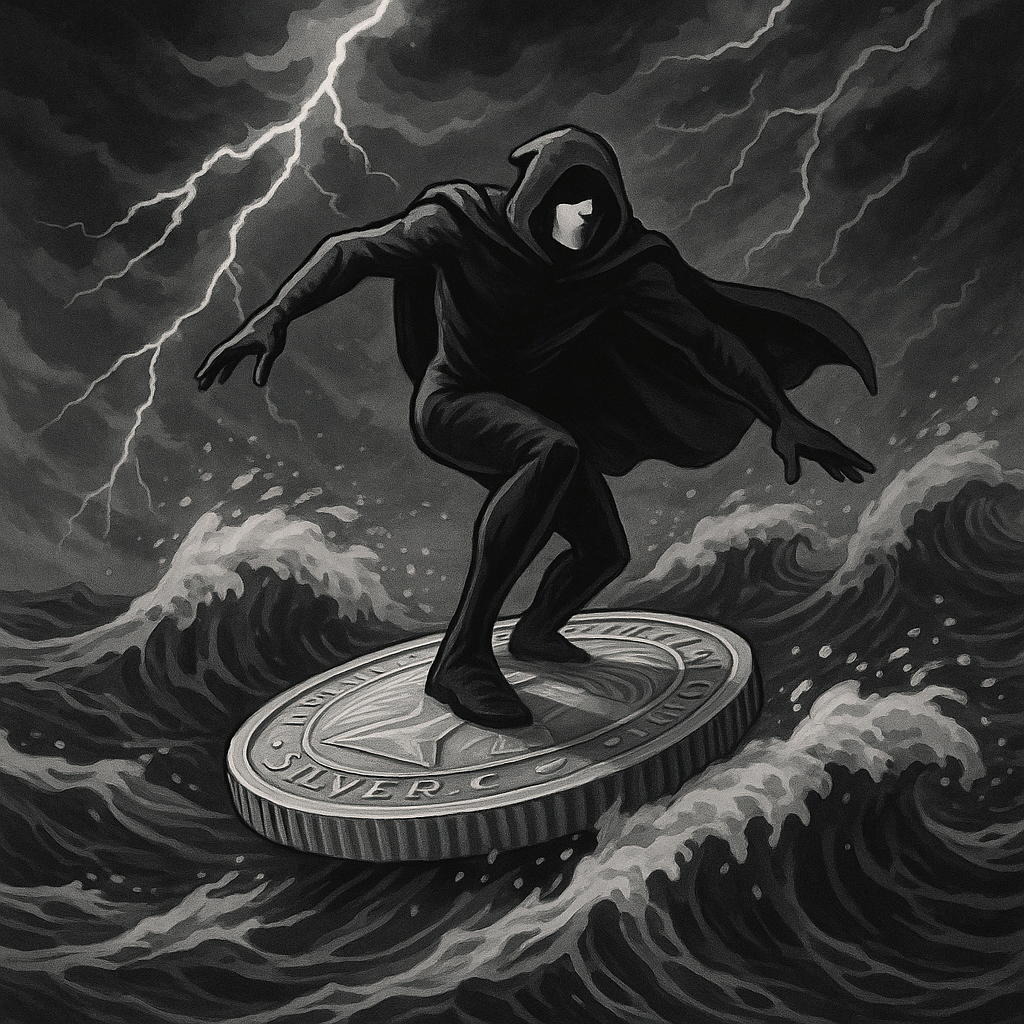
The Tollbooth at the End of the World: Dark Ships, Side Deals, and the Sprint for Physical Gold
Trying to gauge the exact status of the Strait of Hormuz from a desk is a bit like trying to review a restaurant by reading the menu through a telescope. You can spend all day squinting at maritime transponder data on a Bloomberg terminal, trying to guess if the shipping lanes are clear.
Citrini Research decided to do something a bit more practical: they sent an analyst directly to the Strait of Hormuz.

Analyst #3 is either the bravest person alive or the most suicidal
source: Citrini Research
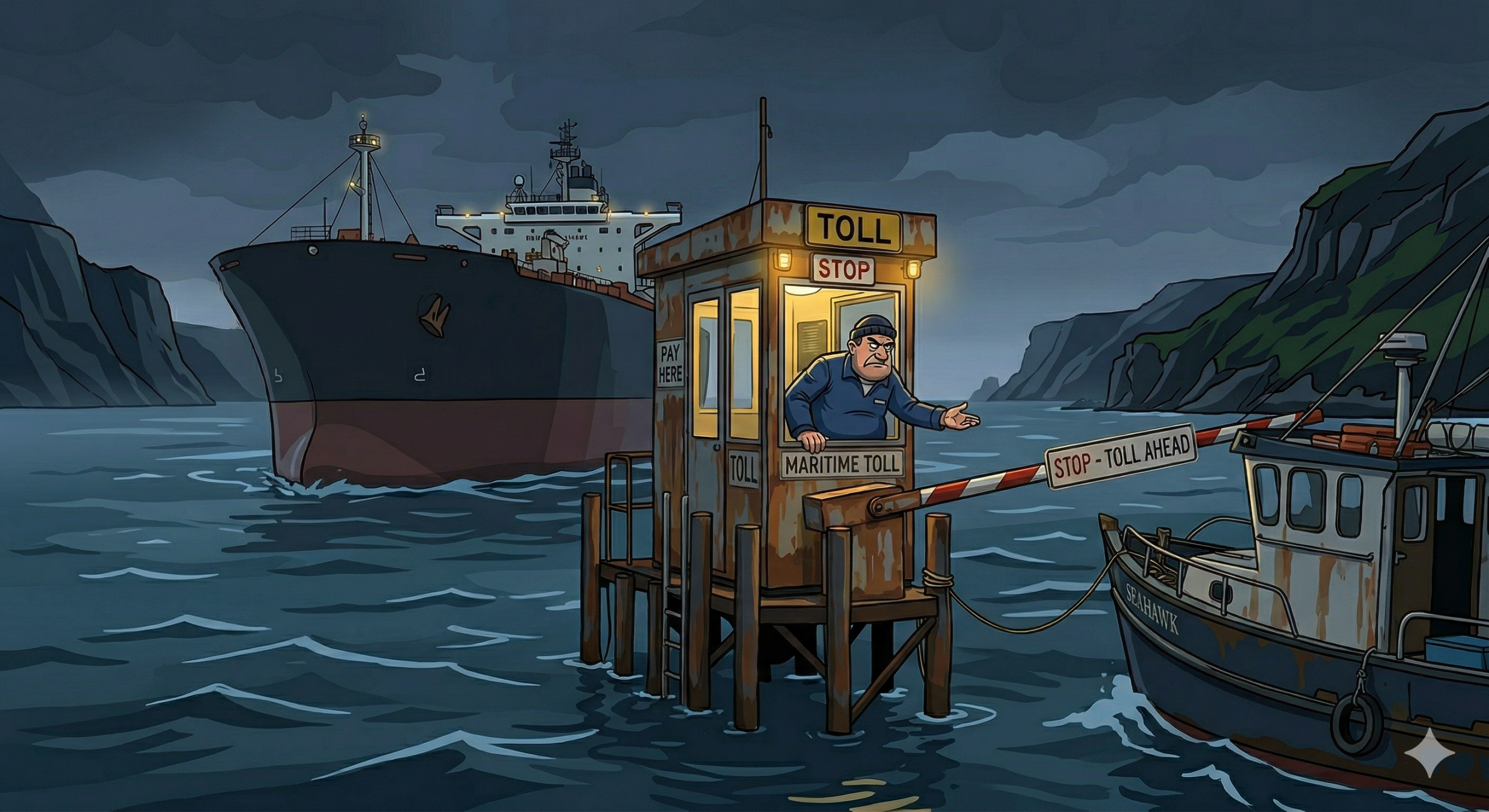
What their field agent found completely dismantles the mainstream narrative. The Strait of Hormuz hasn’t been completely barricaded, nor is it freely open. It has morphed into a geopolitical tollbooth. Standard maritime tracking is basically useless right now because as much as 50% of the vessel traffic is running “dark.”
Ships are turning their transponders off and tiptoeing through the Qeshm-Larak channel to dodge drones. It is global trade on incognito mode.
But the real punchline isn’t how the ships are passing. It is who is passing.
By early April, at least 10 major nations, including staunch U.S. allies like France, Japan, and India, had actively negotiated direct transit access with Iran. Think about that for a second. Sovereign nations allied with Washington are making bespoke side-deals with the exact country the U.S. is currently in direct conflict with.
It’s the geopolitical equivalent of finding out your loyal business partners are quietly negotiating a separate supply contract with your biggest rival.
Why are U.S. allies suddenly acting like free agents? Well take a look at Trump’s own tweet:
Last week, Donald Trump lashed out at European allies who refused to join the Middle East conflict. His message to countries sweating over their jet fuel and energy supplies was refreshingly blunt: “Build up some delayed courage, go to the Strait, and just TAKE IT,” adding that they should “go get your own oil.”
This validates the exact macro thesis we mapped out in 2018. De-globalization isn’t a forecast anymore. The United States has officially retired as the guarantor of frictionless global trade.
The Tollbooth Empire
This brings us to an interesting framework recently outlined by Jiang Xueqin, better known online as “Professor Jiang.” If you haven’t seen him on your timeline yet, he is a Beijing-based educator who recently skyrocketed to internet fame after an old YouTube lecture of his predicting the exact contours of the 2026 US-Iran war went incredibly viral.
Jiang points out a stark reality: If the U.S. is facing de-dollarization, how does it maintain its global leverage? By pivoting to a war of attrition.
For the last 50 years, the U.S. leveraged its status as the global reserve currency to encourage free trade. But if nations are going to actively opt out of the dollar system, the American strategy has to shift from guaranteeing the sea lanes to simply controlling the chokepoints. Whether it is the Panama Canal, the Strait of Malacca, or naval blockades in the Caribbean, the new playbook is brutally simple: If you want to access Western resources, you have to pay the toll and ask for permission.

Source: GIS, Visual Capitalist
The global reaction to this new reality is a sudden, very expensive realization that every nation needs to build its own security apparatus. Industrial nations are waking up to the fact that if the energy supply from the GCC or Russia goes offline, like the 40% of Russian oil export capacity that recently got hit by Ukrainian drones, they are completely on their own. That is your fuel, your food, and your savings. The geopolitical anxiety is getting so heavy that rumors are even circulating about European nations drafting travel restrictions for fighting-age males just to prepare for conscription.
Nothing says “transitory geopolitical friction” quite like preparing for a national draft.
Heyokha’s “On the Ground” Research
Here at Heyokha, we also pride ourselves on doing on-the-ground research. Though, admittedly, our latest fieldwork didn’t involve dodging drones in the Middle East. It involved walking through the MRT stations and observing billboards here in Central Jakarta.
The desperate scramble for physical security isn’t just a macroeconomic debate for Davos attendees; it has hit the retail streets.
Right now, Jakarta is plastered with advertisements for the “Tring! Golden Run 2026″—a massive 5K and 10K race sponsored by Pegadaian, the state-owned pawnbroker. The prize? Participants are literally racing to win physical gold vouchers.
And guess what? It is completely sold out.

Fresh off the streets

Sounds like a great deal to me
When everyday citizens are voluntarily sprinting 10 kilometers through the Jakarta humidity just to get their hands on a fraction of an ounce of gold, the psychological shift has happened. People are already moving. Literally sprinting. The sea lanes are heavily contested, the fiat system has been weaponized, and public trust in paper promises is evaporating.
Gold is no longer just a hedge. It is the only thing that makes sense.
Tara Mulia
For more blogs like these, subscribe to our newsletter here!
Admin heyokha
Share
Trying to gauge the exact status of the Strait of Hormuz from a desk is a bit like trying to review a restaurant by reading the menu through a telescope. You can spend all day squinting at maritime transponder data on a Bloomberg terminal, trying to guess if the shipping lanes are clear.
Citrini Research decided to do something a bit more practical: they sent an analyst directly to the Strait of Hormuz.

Analyst #3 is either the bravest person alive or the most suicidal
source: Citrini Research
What their field agent found completely dismantles the mainstream narrative. The Strait of Hormuz hasn’t been completely barricaded, nor is it freely open. It has morphed into a geopolitical tollbooth. Standard maritime tracking is basically useless right now because as much as 50% of the vessel traffic is running “dark.”
Ships are turning their transponders off and tiptoeing through the Qeshm-Larak channel to dodge drones. It is global trade on incognito mode.
But the real punchline isn’t how the ships are passing. It is who is passing.
By early April, at least 10 major nations, including staunch U.S. allies like France, Japan, and India, had actively negotiated direct transit access with Iran. Think about that for a second. Sovereign nations allied with Washington are making bespoke side-deals with the exact country the U.S. is currently in direct conflict with.
It’s the geopolitical equivalent of finding out your loyal business partners are quietly negotiating a separate supply contract with your biggest rival.
Why are U.S. allies suddenly acting like free agents? Well take a look at Trump’s own tweet:
Last week, Donald Trump lashed out at European allies who refused to join the Middle East conflict. His message to countries sweating over their jet fuel and energy supplies was refreshingly blunt: “Build up some delayed courage, go to the Strait, and just TAKE IT,” adding that they should “go get your own oil.”
This validates the exact macro thesis we mapped out in 2018. De-globalization isn’t a forecast anymore. The United States has officially retired as the guarantor of frictionless global trade.
The Tollbooth Empire
This brings us to an interesting framework recently outlined by Jiang Xueqin, better known online as “Professor Jiang.” If you haven’t seen him on your timeline yet, he is a Beijing-based educator who recently skyrocketed to internet fame after an old YouTube lecture of his predicting the exact contours of the 2026 US-Iran war went incredibly viral.
Jiang points out a stark reality: If the U.S. is facing de-dollarization, how does it maintain its global leverage? By pivoting to a war of attrition.
For the last 50 years, the U.S. leveraged its status as the global reserve currency to encourage free trade. But if nations are going to actively opt out of the dollar system, the American strategy has to shift from guaranteeing the sea lanes to simply controlling the chokepoints. Whether it is the Panama Canal, the Strait of Malacca, or naval blockades in the Caribbean, the new playbook is brutally simple: If you want to access Western resources, you have to pay the toll and ask for permission.

Source: GIS, Visual Capitalist
The global reaction to this new reality is a sudden, very expensive realization that every nation needs to build its own security apparatus. Industrial nations are waking up to the fact that if the energy supply from the GCC or Russia goes offline, like the 40% of Russian oil export capacity that recently got hit by Ukrainian drones, they are completely on their own. That is your fuel, your food, and your savings. The geopolitical anxiety is getting so heavy that rumors are even circulating about European nations drafting travel restrictions for fighting-age males just to prepare for conscription.
Nothing says “transitory geopolitical friction” quite like preparing for a national draft.
Heyokha’s “On the Ground” Research
Here at Heyokha, we also pride ourselves on doing on-the-ground research. Though, admittedly, our latest fieldwork didn’t involve dodging drones in the Middle East. It involved walking through the MRT stations and observing billboards here in Central Jakarta.
The desperate scramble for physical security isn’t just a macroeconomic debate for Davos attendees; it has hit the retail streets.
Right now, Jakarta is plastered with advertisements for the “Tring! Golden Run 2026″—a massive 5K and 10K race sponsored by Pegadaian, the state-owned pawnbroker. The prize? Participants are literally racing to win physical gold vouchers.
And guess what? It is completely sold out.

Fresh off the streets

Sounds like a great deal to me
When everyday citizens are voluntarily sprinting 10 kilometers through the Jakarta humidity just to get their hands on a fraction of an ounce of gold, the psychological shift has happened. People are already moving. Literally sprinting. The sea lanes are heavily contested, the fiat system has been weaponized, and public trust in paper promises is evaporating.
Gold is no longer just a hedge. It is the only thing that makes sense.
Tara Mulia
For more blogs like these, subscribe to our newsletter here!
Admin heyokha
Share