Squeeze Me, I’m Stressed
Squeeze Me, I’m Stressed
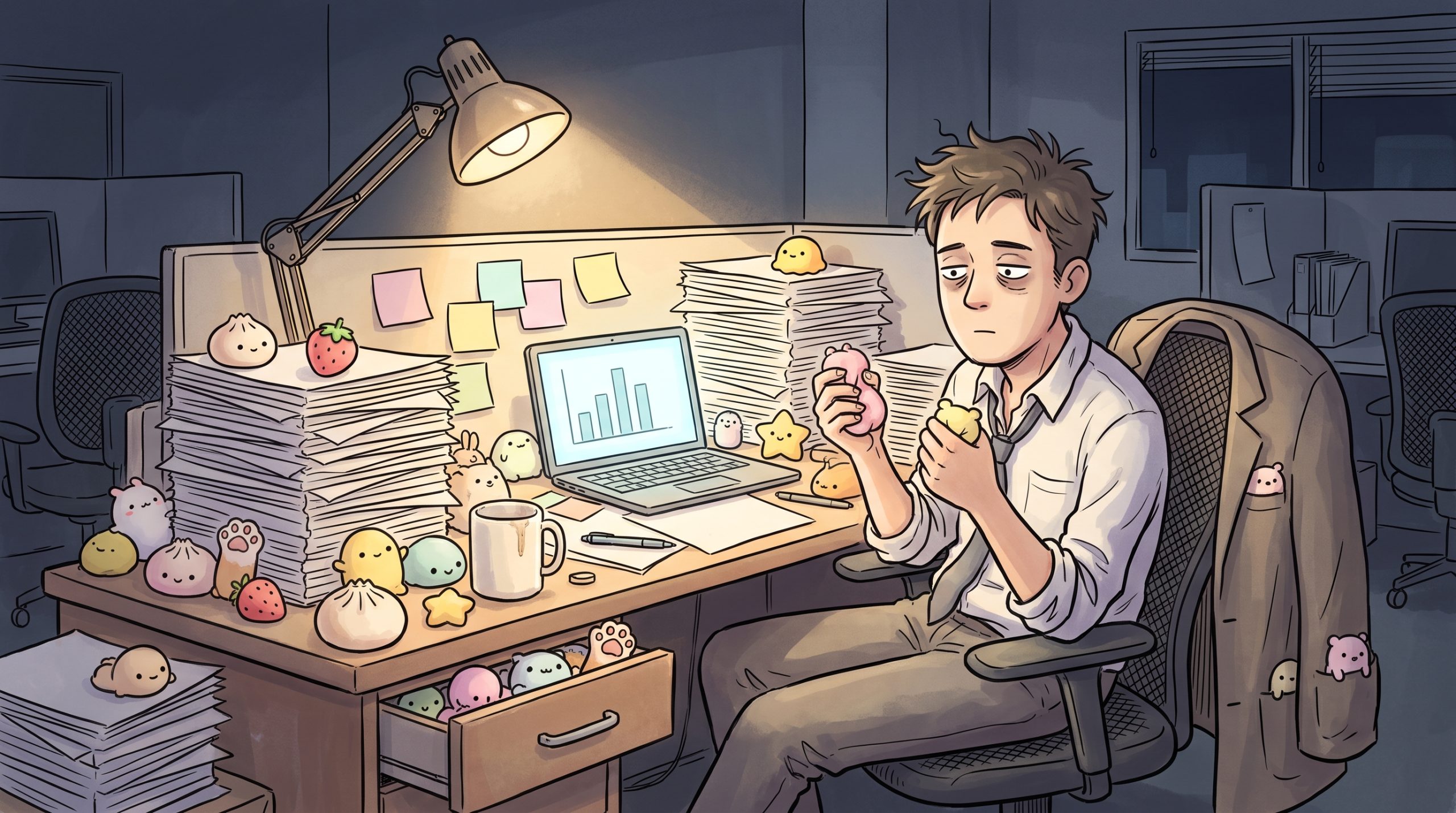
This summer, some of the most sought-after dumplings in the world couldn’t be eaten. They come in little steamer baskets, they collapse under your thumb, and then, slowly, they puff themselves back into shape. The New Yorker counted fake-dumpling squishies among the defining children’s crazes of summer 2026. Plenty of adults are buying them too.
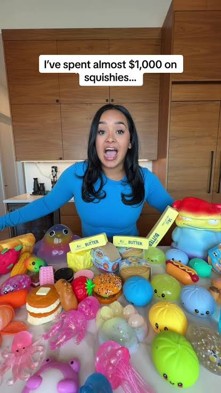
Source: TikTok Andrea Lopez
Squishy toys are having a moment, and not a small one. In Sioux Falls, South Dakota, the staff at Child’s Play Toys started keeping a tally behind the counter of calls from people hunting for them. One Friday evening this April, it reached 45; the owner promised everyone coffee if it hit 50. “I have never seen anything else like this in my 16 years of business,” she told SiouxFalls.Business in April.
A whole menu of squish
“Squishy” is less a product than a category, and it has more variations than a dim sum menu.
There are the original kawaii squishies from Japan: slow-rising foam shaped like buns, cakes and animals, which had their first global moment around 2017. There are gel-filled stress balls, led by the NeeDoh range from Massachusetts toymaker Schylling. There are mystery dumplings, sold blind in steamer-basket packaging so you don’t know which one you’ve got until you open it. There are squishy butter sticks (yes, really), and softer silicone “taba” squishies shaped like paws, capybaras and strawberries, many of them sold by small makers online.
They feel different, too, which is half the fun. Enthusiasts compare texture and “slow rise” the way coffee people compare roasts: how a squishy gives under your fingers, how long it takes to recover, whether it is jelly-bouncy, butter-soft, or even crunchy.
The rush
What they share this year is scarcity. Schylling’s chief executive said in April that the company had sold a full year of NeeDoh inventory in the first nine weeks of 2026, and it stopped taking on new stockists. In Sioux Falls, a sporting-goods store that hoped a shipment of mystery dumplings would last a month sold out in two days. A candy shop nearby sold more than 300 in a single weekend.
And where there is scarcity, there is a market. Shops ration purchases to two per customer. Parents trade with other parents: one Baltimore mother bought 15 squishies from other mums because they were all her daughter wanted for her 13th birthday. Collectors chase rare colours and glitter editions, and blind packaging means duplicates, which means swapping. Copies have followed close behind. In July, trading standards officers in one Welsh council area reported that traders had surrendered 224 unsafe squishy toys, from viral dumplings to butter sticks, many of which failed toy-safety rules.
How did a squeeze toy end up with a black market?

Source: Youtube Nisha Noelle
We’ve been here before
If this feels familiar, it should. Toy crazes tend to follow the same arc: cheap, tactile, made for the camera, briefly scarce, then everywhere.
Remember the great glue shortage? In late 2016, children discovered homemade slime: glue, water, borax and food colouring. Sales of Elmer’s school glue more than doubled that December, shops ran out, and kids started selling their creations at school.
Squishies themselves have been round the cycle once already. After the first foam-squishy wave, Denmark’s environmental protection agency tested 12 of them in 2018, found they gave off harmful chemicals and had them pulled from shelves (a European toy-industry body disputed the testing method). The year before, fidget spinners went from nowhere to all 20 of Amazon’s top-selling toys by May 2017; by July, Google searches had fallen to 15% of their peak.
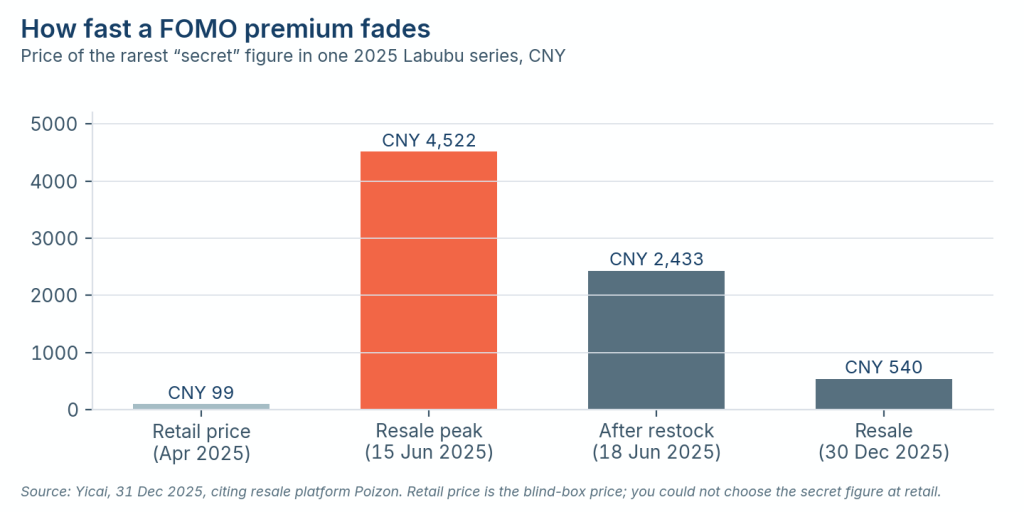
And then there was Labubu, the grinning monster that sent fans queuing outside shops across Asia in 2025. Its blind boxes retailed for about CNY 99, yet the rarest figure in one popular series fetched more than CNY 4,500 on a resale platform in mid-June. After repeated restocks, it was going for about CNY 540 by the end of the year. As a Pop Mart executive put it during the cooldown, “It’s like concert tickets.”
So are squishies just the next Labubu? Perhaps. But that is the less interesting question.
The case for the squishy
Before we get too clever about it, the toy deserves to be taken seriously. Who hasn’t clicked a pen through a long meeting? Sensory and fidget toys have long been used to help children and adults focus and manage anxiety. Shop owners describe customers with arthritis buying them, professionals squeezing them on calls, and parents who say their children sit with a bucket of squishies in the evening instead of a phone.
There is a sting, too. In Sioux Falls, a volunteer at a mental-health nonprofit’s gift shop, which has stocked these toys for years, noticed that some customers with anxiety now worry about getting their squishy, and about breaking it. People who relied on them long before they were fashionable are struggling to find one. A calming object, once it becomes scarce, can turn into a small source of stress.
The $15 barometer
What struck us most, though, was the timing. Look at who is queuing, and in what kind of year.
By most measures, Americans have rarely felt worse. The University of Michigan’s consumer sentiment index fell to 44.8 in May, the lowest reading since its records began in 1952. In September, the Conference Board’s confidence index dropped to 81.9, its lowest since 2014. Euromonitor International’s Top Global Consumer Trends 2026 report, published last November, found that nearly 58% of people worldwide feel moderate to extreme stress every day.
Yet the toy aisle is having a record year. Sales at US hobby, toy and game stores reached $13.9 billion in the first seven months of 2026, up 23% on a year earlier and the highest for that stretch in data going back to 1992. And overall, inflation-adjusted consumer spending was still about 2.6% higher in August than a year before.
Why would the gloomiest consumers on record be emptying the toy shelves?
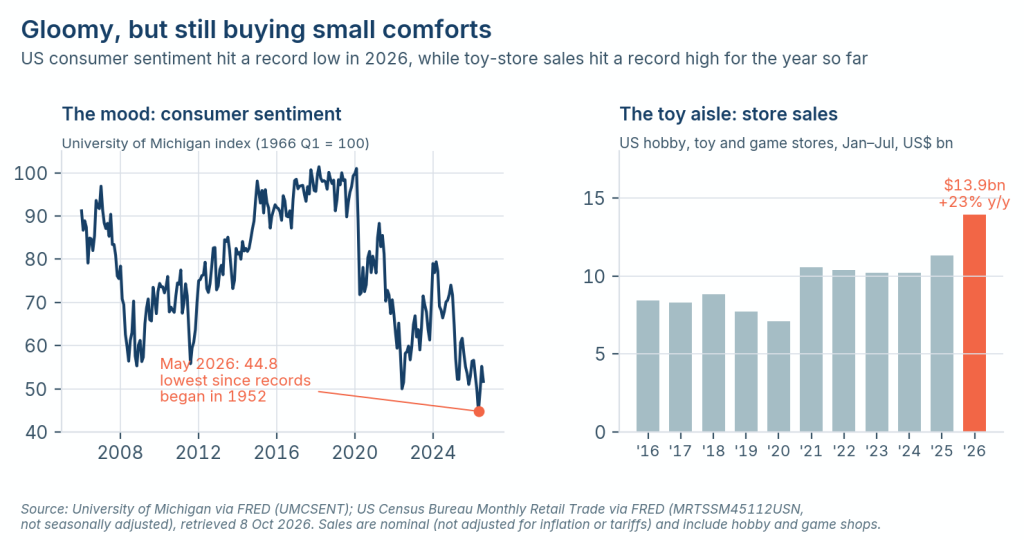
Our read is that the toy aisle is telling us something the surveys can’t. When the big things feel out of reach (a first home, a secure job, a quieter news cycle), people don’t stop spending. They shrink the size of their certainty. A $15 squishy is a small, sure thing in an unsure year: it costs little, it works every time, and nobody can raise its interest rate.
This is an old idea in a new shape. In 2001, Leonard Lauder of Estée Lauder noticed lipstick sales rising in the post-9/11 downturn and called it the “lipstick index”. The sociologist Juliet Schor had described the same pull towards small, compensating luxuries a few years earlier.
We should be honest about its limits. Economists have long found the evidence for the lipstick effect mixed; lipstick sales actually fell for several years after 2007. Toy crazes also happen in good times: fidget spinners swept the world in a year of steady growth. And the toy-store figures are not adjusted for inflation or tariffs, and include hobby and game shops as well as squishies. So treat this as a barometer, not a forecast.
For anyone in the queue, there is a smaller lesson inside the bigger one. The calm was never in the rare colour. The plain squishy in your drawer squeezes exactly the same.
The most honest economic indicator of 2026 might cost $15 and fit in your palm. The question is whether we are reading it, or just squeezing it.
Tara Mulia
For more blogs like these, subscribe to our newsletter here!
Important information
This article is published by Heyokha Brothers Limited (“Heyokha”), a corporation licensed by the Securities and Futures Commission of Hong Kong (CE No. BOS569). It is provided for general information and discussion purposes only. It reflects the authors’ views and observations at the date of publication, and these may change without notice.
Nothing in this article is investment, legal, tax or other professional advice, investment research, or a recommendation, offer or solicitation to buy or sell any security, fund or other investment product. It is not directed at any person in any jurisdiction where its publication or availability would be unlawful. Any companies, securities or assets mentioned are for illustration only and are not a recommendation.
Information from third-party sources is believed to be reliable, but it has not been independently verified. No representation or warranty is given as to its accuracy or completeness. Forward-looking statements are inherently uncertain, and actual outcomes may differ materially. Investment involves risk, the value of investments can go down as well as up, and past performance is not indicative of future results. Heyokha, its directors and employees, and funds it manages may hold positions in assets mentioned.
Readers should seek independent professional advice before making any investment decision. This article has not been reviewed by the Securities and Futures Commission.
Admin heyokha

Share


This summer, some of the most sought-after dumplings in the world couldn’t be eaten. They come in little steamer baskets, they collapse under your thumb, and then, slowly, they puff themselves back into shape. The New Yorker counted fake-dumpling squishies among the defining children’s crazes of summer 2026. Plenty of adults are buying them too.
Source: TikTok Andrea Lopez
Squishy toys are having a moment, and not a small one. In Sioux Falls, South Dakota, the staff at Child’s Play Toys started keeping a tally behind the counter of calls from people hunting for them. One Friday evening this April, it reached 45; the owner promised everyone coffee if it hit 50. “I have never seen anything else like this in my 16 years of business,” she told SiouxFalls.Business in April.
A whole menu of squish
“Squishy” is less a product than a category, and it has more variations than a dim sum menu.
There are the original kawaii squishies from Japan: slow-rising foam shaped like buns, cakes and animals, which had their first global moment around 2017. There are gel-filled stress balls, led by the NeeDoh range from Massachusetts toymaker Schylling. There are mystery dumplings, sold blind in steamer-basket packaging so you don’t know which one you’ve got until you open it. There are squishy butter sticks (yes, really), and softer silicone “taba” squishies shaped like paws, capybaras and strawberries, many of them sold by small makers online.
They feel different, too, which is half the fun. Enthusiasts compare texture and “slow rise” the way coffee people compare roasts: how a squishy gives under your fingers, how long it takes to recover, whether it is jelly-bouncy, butter-soft, or even crunchy.
The rush
What they share this year is scarcity. Schylling’s chief executive said in April that the company had sold a full year of NeeDoh inventory in the first nine weeks of 2026, and it stopped taking on new stockists. In Sioux Falls, a sporting-goods store that hoped a shipment of mystery dumplings would last a month sold out in two days. A candy shop nearby sold more than 300 in a single weekend.
And where there is scarcity, there is a market. Shops ration purchases to two per customer. Parents trade with other parents: one Baltimore mother bought 15 squishies from other mums because they were all her daughter wanted for her 13th birthday. Collectors chase rare colours and glitter editions, and blind packaging means duplicates, which means swapping. Copies have followed close behind. In July, trading standards officers in one Welsh council area reported that traders had surrendered 224 unsafe squishy toys, from viral dumplings to butter sticks, many of which failed toy-safety rules.
How did a squeeze toy end up with a black market?
Source: Youtube Nisha Noelle
We’ve been here before
If this feels familiar, it should. Toy crazes tend to follow the same arc: cheap, tactile, made for the camera, briefly scarce, then everywhere.
Remember the great glue shortage? In late 2016, children discovered homemade slime: glue, water, borax and food colouring. Sales of Elmer’s school glue more than doubled that December, shops ran out, and kids started selling their creations at school.
Squishies themselves have been round the cycle once already. After the first foam-squishy wave, Denmark’s environmental protection agency tested 12 of them in 2018, found they gave off harmful chemicals and had them pulled from shelves (a European toy-industry body disputed the testing method). The year before, fidget spinners went from nowhere to all 20 of Amazon’s top-selling toys by May 2017; by July, Google searches had fallen to 15% of their peak.
And then there was Labubu, the grinning monster that sent fans queuing outside shops across Asia in 2025. Its blind boxes retailed for about CNY 99, yet the rarest figure in one popular series fetched more than CNY 4,500 on a resale platform in mid-June. After repeated restocks, it was going for about CNY 540 by the end of the year. As a Pop Mart executive put it during the cooldown, “It’s like concert tickets.”
So are squishies just the next Labubu? Perhaps. But that is the less interesting question.
The case for the squishy
Before we get too clever about it, the toy deserves to be taken seriously. Who hasn’t clicked a pen through a long meeting? Sensory and fidget toys have long been used to help children and adults focus and manage anxiety. Shop owners describe customers with arthritis buying them, professionals squeezing them on calls, and parents who say their children sit with a bucket of squishies in the evening instead of a phone.
There is a sting, too. In Sioux Falls, a volunteer at a mental-health nonprofit’s gift shop, which has stocked these toys for years, noticed that some customers with anxiety now worry about getting their squishy, and about breaking it. People who relied on them long before they were fashionable are struggling to find one. A calming object, once it becomes scarce, can turn into a small source of stress.
The $15 barometer
What struck us most, though, was the timing. Look at who is queuing, and in what kind of year.
By most measures, Americans have rarely felt worse. The University of Michigan’s consumer sentiment index fell to 44.8 in May, the lowest reading since its records began in 1952. In September, the Conference Board’s confidence index dropped to 81.9, its lowest since 2014. Euromonitor International’s Top Global Consumer Trends 2026 report, published last November, found that nearly 58% of people worldwide feel moderate to extreme stress every day.
Yet the toy aisle is having a record year. Sales at US hobby, toy and game stores reached $13.9 billion in the first seven months of 2026, up 23% on a year earlier and the highest for that stretch in data going back to 1992. And overall, inflation-adjusted consumer spending was still about 2.6% higher in August than a year before.
Why would the gloomiest consumers on record be emptying the toy shelves?
Our read is that the toy aisle is telling us something the surveys can’t. When the big things feel out of reach (a first home, a secure job, a quieter news cycle), people don’t stop spending. They shrink the size of their certainty. A $15 squishy is a small, sure thing in an unsure year: it costs little, it works every time, and nobody can raise its interest rate.
This is an old idea in a new shape. In 2001, Leonard Lauder of Estée Lauder noticed lipstick sales rising in the post-9/11 downturn and called it the “lipstick index”. The sociologist Juliet Schor had described the same pull towards small, compensating luxuries a few years earlier.
We should be honest about its limits. Economists have long found the evidence for the lipstick effect mixed; lipstick sales actually fell for several years after 2007. Toy crazes also happen in good times: fidget spinners swept the world in a year of steady growth. And the toy-store figures are not adjusted for inflation or tariffs, and include hobby and game shops as well as squishies. So treat this as a barometer, not a forecast.
For anyone in the queue, there is a smaller lesson inside the bigger one. The calm was never in the rare colour. The plain squishy in your drawer squeezes exactly the same.
The most honest economic indicator of 2026 might cost $15 and fit in your palm. The question is whether we are reading it, or just squeezing it.
Tara Mulia
For more blogs like these, subscribe to our newsletter here!
Important information
This article is published by Heyokha Brothers Limited (“Heyokha”), a corporation licensed by the Securities and Futures Commission of Hong Kong (CE No. BOS569). It is provided for general information and discussion purposes only. It reflects the authors’ views and observations at the date of publication, and these may change without notice.
Nothing in this article is investment, legal, tax or other professional advice, investment research, or a recommendation, offer or solicitation to buy or sell any security, fund or other investment product. It is not directed at any person in any jurisdiction where its publication or availability would be unlawful. Any companies, securities or assets mentioned are for illustration only and are not a recommendation.
Information from third-party sources is believed to be reliable, but it has not been independently verified. No representation or warranty is given as to its accuracy or completeness. Forward-looking statements are inherently uncertain, and actual outcomes may differ materially. Investment involves risk, the value of investments can go down as well as up, and past performance is not indicative of future results. Heyokha, its directors and employees, and funds it manages may hold positions in assets mentioned.
Readers should seek independent professional advice before making any investment decision. This article has not been reviewed by the Securities and Futures Commission.
Admin heyokha
Share