Food for Thought: Time to rethink your vacation
Food for Thought: Time to rethink your vacation

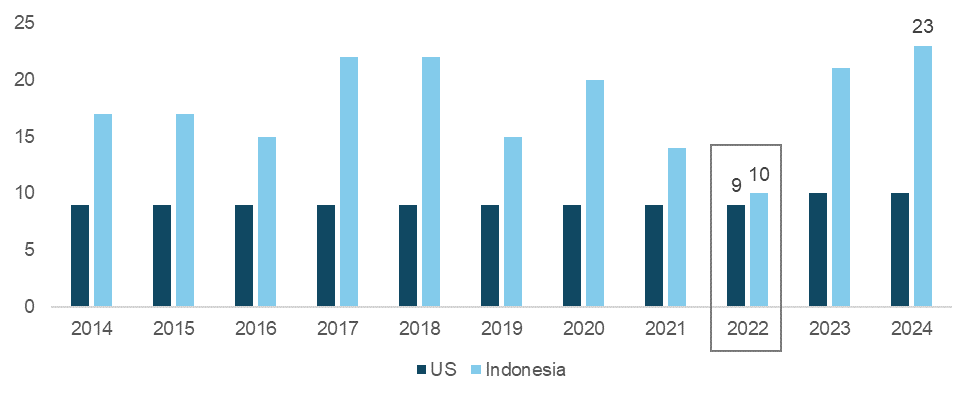
Indonesia is breaking records, but not in the way you might think. It’s not about the hottest chili or the longest dance marathon—no, Indonesia has increased its number of holidays to the most it’s ever had in a year, clocking in at a whopping 23 days.
Now let’s toss that number next to the US stock market’s holiday calendar and the difference between are quite stark. The US has maintained its days off at an average of 9 days whereas Indonesia averages at 17.
Indonesia has more holidays than the US
Number of stock market holidays of the US vs Indonesia (in days)
The last half decade has been a tough time for investors in emerging markets, with the US equities returns often leaving Indonesia’s in its trail. But there was a glimmer of light in the dark tunnel: In 2022, Indonesia’s Jakarta Composite Index (JCI) outperformed the S&P 500 index with an impressive gain of over 15%.
Indonesia’s JCI outperformed S&P500 when its holidays were the lowest
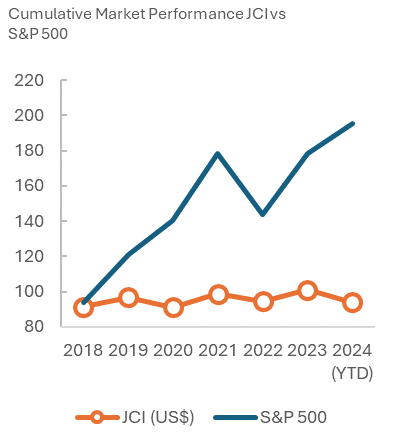
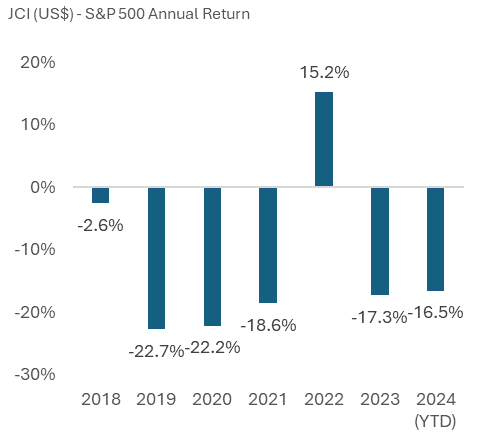
Source: Bloomberg
Coincidentally, 2022 was also the year where Indonesia had its lowest number of holidays, almost matching the US’s calendar with 10 and 9 days off respectively.
Perhaps holidays might not be the main driver for market’s outperformance and underperformance, but it does make you ponder: might the market’s ups and downs be tied to how many days traders get to kick back and relax?
Could decreasing the number of holidays be the low hanging fruit ready to be reaped to improve market performance?
Let’s ponder that as we plan our next holiday!
Tara Mulia
For more blogs like these, subscribe to our newsletter here!
Important information
This article is published by Heyokha Brothers Limited (“Heyokha”), a corporation licensed by the Securities and Futures Commission of Hong Kong (CE No. BOS569). It is provided for general information and discussion purposes only. It reflects the authors’ views and observations at the date of publication, and these may change without notice.
Nothing in this article is investment, legal, tax or other professional advice, investment research, or a recommendation, offer or solicitation to buy or sell any security, fund or other investment product. It is not directed at any person in any jurisdiction where its publication or availability would be unlawful. Any companies, securities or assets mentioned are for illustration only and are not a recommendation.
Information from third-party sources is believed to be reliable, but it has not been independently verified. No representation or warranty is given as to its accuracy or completeness. Forward-looking statements are inherently uncertain, and actual outcomes may differ materially. Investment involves risk, the value of investments can go down as well as up, and past performance is not indicative of future results. Heyokha, its directors and employees, and funds it manages may hold positions in assets mentioned.
Readers should seek independent professional advice before making any investment decision. This article has not been reviewed by the Securities and Futures Commission.
Admin heyokha

Share


Indonesia is breaking records, but not in the way you might think. It’s not about the hottest chili or the longest dance marathon—no, Indonesia has increased its number of holidays to the most it’s ever had in a year, clocking in at a whopping 23 days.
Now let’s toss that number next to the US stock market’s holiday calendar and the difference between are quite stark. The US has maintained its days off at an average of 9 days whereas Indonesia averages at 17.
Indonesia has more holidays than the US
Number of stock market holidays of the US vs Indonesia (in days)
The last half decade has been a tough time for investors in emerging markets, with the US equities returns often leaving Indonesia’s in its trail. But there was a glimmer of light in the dark tunnel: In 2022, Indonesia’s Jakarta Composite Index (JCI) outperformed the S&P 500 index with an impressive gain of over 15%.
Indonesia’s JCI outperformed S&P500 when its holidays were the lowest
Source: Bloomberg
Coincidentally, 2022 was also the year where Indonesia had its lowest number of holidays, almost matching the US’s calendar with 10 and 9 days off respectively.
Perhaps holidays might not be the main driver for market’s outperformance and underperformance, but it does make you ponder: might the market’s ups and downs be tied to how many days traders get to kick back and relax?
Could decreasing the number of holidays be the low hanging fruit ready to be reaped to improve market performance?
Let’s ponder that as we plan our next holiday!
Tara Mulia
For more blogs like these, subscribe to our newsletter here!
Important information
This article is published by Heyokha Brothers Limited (“Heyokha”), a corporation licensed by the Securities and Futures Commission of Hong Kong (CE No. BOS569). It is provided for general information and discussion purposes only. It reflects the authors’ views and observations at the date of publication, and these may change without notice.
Nothing in this article is investment, legal, tax or other professional advice, investment research, or a recommendation, offer or solicitation to buy or sell any security, fund or other investment product. It is not directed at any person in any jurisdiction where its publication or availability would be unlawful. Any companies, securities or assets mentioned are for illustration only and are not a recommendation.
Information from third-party sources is believed to be reliable, but it has not been independently verified. No representation or warranty is given as to its accuracy or completeness. Forward-looking statements are inherently uncertain, and actual outcomes may differ materially. Investment involves risk, the value of investments can go down as well as up, and past performance is not indicative of future results. Heyokha, its directors and employees, and funds it manages may hold positions in assets mentioned.
Readers should seek independent professional advice before making any investment decision. This article has not been reviewed by the Securities and Futures Commission.
Admin heyokha
Share