The Canvas Bag Theory of Markets

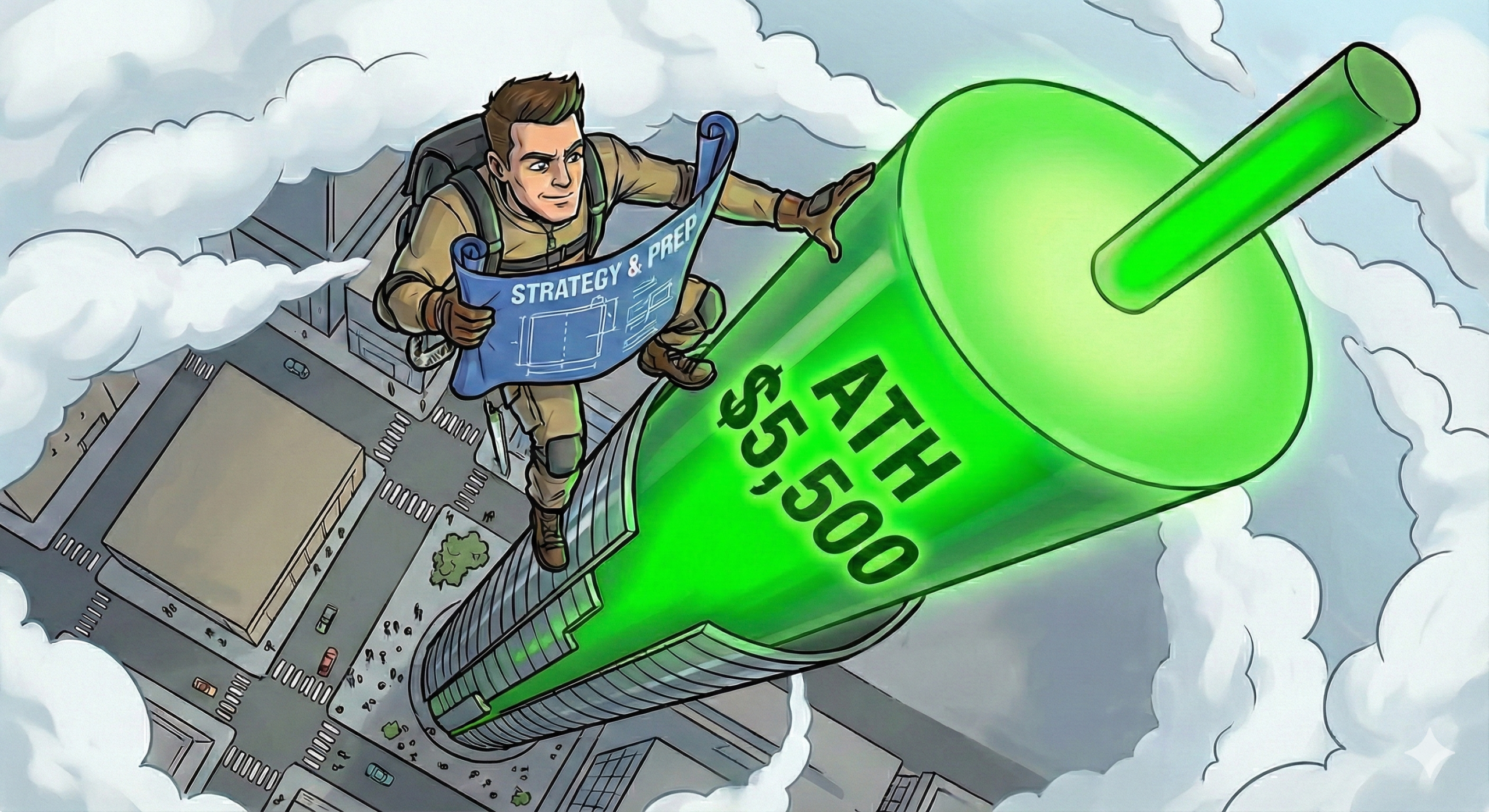
If you want to understand why gold just hit an All-Time High of $5,500, don’t look at the Federal Reserve’s balance sheet. Look at a $4.99 (IDR 83,000) canvas bag.

Last year, Trader Joe’s released a mini canvas tote bag. It was functional, simple, and cheap. It also caused grown adults to line up at 5:00 AM, fight in aisles, and resell them on eBay for $500. In London, Tokyo, and even close to home here in Jakarta, the bag became a status symbol. Why?

FOMO (Fear Of Missing Out).

It wasn’t about the canvas. It was about the crowd. When everyone else is running toward something, it’s very much human instinct to feel we should probably run that way too.
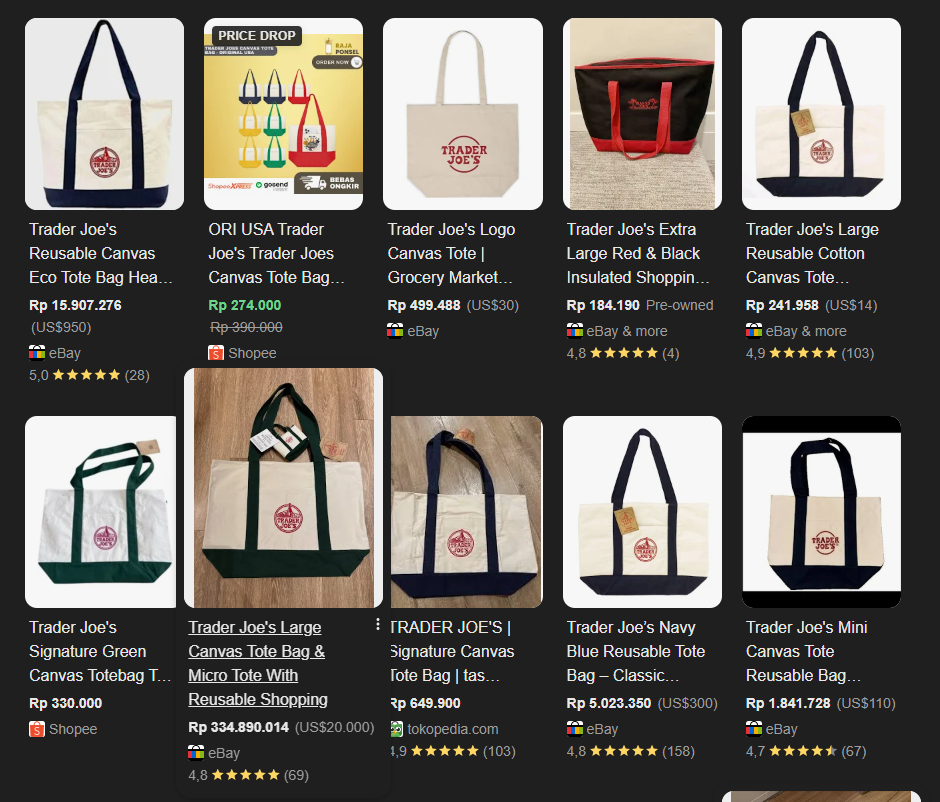
Even the normal tote bags are being sold upwards of $950. Now that’s a 200x return!

From Aisle 4 to Asset Class

This same psychological contagion is now bleeding into the gold market.

A few months ago, buying gold was for central banks and “doomsday preppers.” Today? It’s the topic that no one could stop talking about all day even during your most mundane routines. One of our team members shared his badminton buddies started asking if they should pile in. My grandpa who comes to visit every weekend also started asking if gold could go higher instead of what to eat for Sunday brunch.

We saw the preview of this last year in Asia and Australia. In Sydney, buyers at ABC Bullion were sleeping overnight on the pavement just to be first through the door when the shop opened. In China, young Gen Z buyers started buying “gold beans” (tiny gram-sized nuggets) because they stopped trusting savings accounts.

The gold beans that went viral in China. Very demure, Very cutesy, and Very Gen Z

Image source: Bloomberg

Here in Jakarta, there are recounts of people staying overnight in front of gold shops since 9pm to place their names in an queue honor system piece of paper

Image source: CNA

When people who have never owned an ounce of metal suddenly feel the itch to buy at all-time highs, it signals a shift. But it also signals danger. When you buy on emotion, you sell on panic.

Navigating the Vertigo

The question on everyone’s mind has shifted from “Should I buy?” to “Is it crashing?” now that we’ve seen a sharp correction.

Buying or holding at these heights feels unnatural. It feels dangerous. It gives you vertigo.

But let’s look at another feat of vertigo. Just this week, Alex Honnold (the climber from Free Solo) free-soloed the Taipei 101 building. No ropes. No safety net. Just him, 508 meters of glass and steel, and a crazy short 90-minute climb that the world watched with sweaty palms.




Images source: Netflix

To the average person, looking up at the 101st floor looks insane. It looks like a death wish. But to Honnold? It was just math, physics, and preparation. He didn’t climb it because he was reckless. He climbed it because he had studied the “bamboo boxes” of the structure. He knew exactly where the holds were, and more importantly, he knew what to do if he slipped.

Navigating this gold market requires that same “Honnold Preparation.”

The chart looks intimidating. The drop looks scary. But if you have done the homework, you realize that the fundamental structure hasn’t changed. You aren’t just reacting to a price tick; you are looking at a repricing of the dollar itself. As we wrote in our previous reports, when the currency is being debased, the price of real things has to go up even if the path there is bumpy.

If the Metal Scares You, Look at the Dirt

If buying the metal at these levels still gives you too much vertigo, there is another door open: the miners.

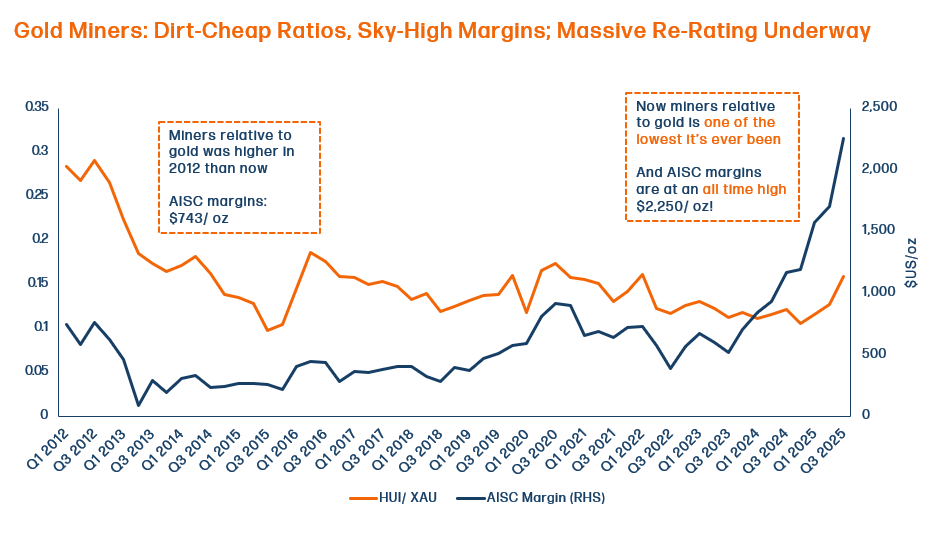
Think of gold mining like a neglected apple orchard. For years, investors ignored it, so no new trees were planted. Since 2018, production largely flatlined, but the high prices are finally acting as fertilizer. The latest data shows Q3 2025 mine production hit a quarterly record of 977 tonnes (up 2% year-on-year), putting 2025 on track to set a new all-time high for annual output.
Source: Heyokha Research

The orchard is waking up.

  1. The Margin Explosion: The Average All-In Sustaining Costs (AISC) for miners hover around $2,250/oz, making the math undeniable. With gold at $5,500, miners are pocketing a record spread of nearly $3,000 per ounce. A 1% rise in gold can now drive a 2–3% jump in miner valuations.
  2. The Hidden “Option” Value: Higher prices turn “waste rock” into “wealth.” Take Barrick Gold—their latest report showed a 23% jump in gold reserves (adding ~17 million ounces). They didn’t magically find new deposits; the higher price just made the old rock profitable to dig up.

While the crowd fights for physical bars, the smart money is quietly buying the companies that own the dirt.

Preparation Over Panic

The old safety net of the 60/40 portfolio of stocks and bond is fraying. With U.S. interest payments now exceeding defense spending, bonds aren’t the safety rope they used to be.

If you are feeling that itch to buy or the urge to panic-sell because of the correction, don’t just follow the crowd with the tote bags. Do the prep.

Alex Honnold didn’t start climbing until he had mapped every inch of the route. You shouldn’t allocate capital until you’ve done the same.

You can access and browse all our past reports here:

The climb might look high, but the view from the top is worth it. Just don’t forget to bring your own bag.


Tara Mulia

For more blogs like these, subscribe to our newsletter here!


Admin heyokha



Share


The Canvas Bag Theory of Markets

If you want to understand why gold just hit an All-Time High of $5,500, don’t look at the Federal Reserve’s balance sheet. Look at a $4.99 (IDR 83,000) canvas bag.

Last year, Trader Joe’s released a mini canvas tote bag. It was functional, simple, and cheap. It also caused grown adults to line up at 5:00 AM, fight in aisles, and resell them on eBay for $500. In London, Tokyo, and even close to home here in Jakarta, the bag became a status symbol. Why?

FOMO (Fear Of Missing Out).

It wasn’t about the canvas. It was about the crowd. When everyone else is running toward something, it’s very much human instinct to feel we should probably run that way too.

Even the normal tote bags are being sold upwards of $950. Now that’s a 200x return!

From Aisle 4 to Asset Class

This same psychological contagion is now bleeding into the gold market.

A few months ago, buying gold was for central banks and “doomsday preppers.” Today? It’s the topic that no one could stop talking about all day even during your most mundane routines. One of our team members shared his badminton buddies started asking if they should pile in. My grandpa who comes to visit every weekend also started asking if gold could go higher instead of what to eat for Sunday brunch.

We saw the preview of this last year in Asia and Australia. In Sydney, buyers at ABC Bullion were sleeping overnight on the pavement just to be first through the door when the shop opened. In China, young Gen Z buyers started buying “gold beans” (tiny gram-sized nuggets) because they stopped trusting savings accounts.

The gold beans that went viral in China. Very demure, Very cutesy, and Very Gen Z

Image source: Bloomberg

Here in Jakarta, there are recounts of people staying overnight in front of gold shops since 9pm to place their names in an queue honor system piece of paper

Image source: CNA

When people who have never owned an ounce of metal suddenly feel the itch to buy at all-time highs, it signals a shift. But it also signals danger. When you buy on emotion, you sell on panic.

Navigating the Vertigo

The question on everyone’s mind has shifted from “Should I buy?” to “Is it crashing?” now that we’ve seen a sharp correction.

Buying or holding at these heights feels unnatural. It feels dangerous. It gives you vertigo.

But let’s look at another feat of vertigo. Just this week, Alex Honnold (the climber from Free Solo) free-soloed the Taipei 101 building. No ropes. No safety net. Just him, 508 meters of glass and steel, and a crazy short 90-minute climb that the world watched with sweaty palms.


Images source: Netflix

To the average person, looking up at the 101st floor looks insane. It looks like a death wish. But to Honnold? It was just math, physics, and preparation. He didn’t climb it because he was reckless. He climbed it because he had studied the “bamboo boxes” of the structure. He knew exactly where the holds were, and more importantly, he knew what to do if he slipped.

Navigating this gold market requires that same “Honnold Preparation.”

The chart looks intimidating. The drop looks scary. But if you have done the homework, you realize that the fundamental structure hasn’t changed. You aren’t just reacting to a price tick; you are looking at a repricing of the dollar itself. As we wrote in our previous reports, when the currency is being debased, the price of real things has to go up even if the path there is bumpy.

If the Metal Scares You, Look at the Dirt

If buying the metal at these levels still gives you too much vertigo, there is another door open: the miners.

Think of gold mining like a neglected apple orchard. For years, investors ignored it, so no new trees were planted. Since 2018, production largely flatlined, but the high prices are finally acting as fertilizer. The latest data shows Q3 2025 mine production hit a quarterly record of 977 tonnes (up 2% year-on-year), putting 2025 on track to set a new all-time high for annual output.

Source: Heyokha Research

The orchard is waking up.

  1. The Margin Explosion: The Average All-In Sustaining Costs (AISC) for miners hover around $2,250/oz, making the math undeniable. With gold at $5,500, miners are pocketing a record spread of nearly $3,000 per ounce. A 1% rise in gold can now drive a 2–3% jump in miner valuations.
  2. The Hidden “Option” Value: Higher prices turn “waste rock” into “wealth.” Take Barrick Gold—their latest report showed a 23% jump in gold reserves (adding ~17 million ounces). They didn’t magically find new deposits; the higher price just made the old rock profitable to dig up.

While the crowd fights for physical bars, the smart money is quietly buying the companies that own the dirt.

Preparation Over Panic

The old safety net of the 60/40 portfolio of stocks and bond is fraying. With U.S. interest payments now exceeding defense spending, bonds aren’t the safety rope they used to be.

If you are feeling that itch to buy or the urge to panic-sell because of the correction, don’t just follow the crowd with the tote bags. Do the prep.

Alex Honnold didn’t start climbing until he had mapped every inch of the route. You shouldn’t allocate capital until you’ve done the same.

You can access and browse all our past reports here:

The climb might look high, but the view from the top is worth it. Just don’t forget to bring your own bag.


Tara Mulia

For more blogs like these, subscribe to our newsletter here!


Admin heyokha


Share


The Opening: A Musical Flop and a Geopolitical Stage

In 1986, ABBA’s Benny Andersson and Björn Ulvaeus teamed up to write Chess, a musical about the Cold War where the board served as a metaphor for superpower rivalry. Despite the catchy score, the production was a flop. It struggled to balance human drama with the cold machinery of global politics.

Caught the Broadway production in December. Full house. It seems American audiences can feel the geopolitical temperature rising. Suddenly, this musical feels less like history and more like a preview

Fast forward to 2026, and we are watching a new production on the global stage that is anything but a song and dance. President Trump has officially signed the charter for the “Board of Peace” at Davos. While it was initially pitched as a mechanism for Gaza’s reconstruction, the charter signed this January reveals a much broader mandate: to “promote stability” and resolve international conflicts.

While the name sounds diplomatic, the mechanics are novel. Permanent membership on the board reportedly requires a $1 billion contribution, and the charter grants “Chairman Trump” sweeping authority, including veto power over resolutions. It is a bold attempt to create a “nimble” alternative to the United Nations. However, in a game of chess, you need players willing to sit at the table. While over 20 nations like Saudi Arabia, Turkey, and Indonesia have signed on, heavyweights like France and Germany have declined, citing concerns over undermining the UN. Right now, much of the world is busy building their own boards.

The Thesis: The Empire Strikes Back

It is easy to dismiss Trump’s headlines: buying Greenland, slapping 25% tariffs on neighbors, proposing grand peace boards: as eccentric noise. But what if they aren’t random at all?

At Heyokha, we see these moves as a coherent strategy to build a resource-based American empire in a de-globalizing world. Trump isn’t just making deals; he is attempting to lock down the hard assets: land, energy, and minerals: required to survive the end of the “just-in-time” global order.

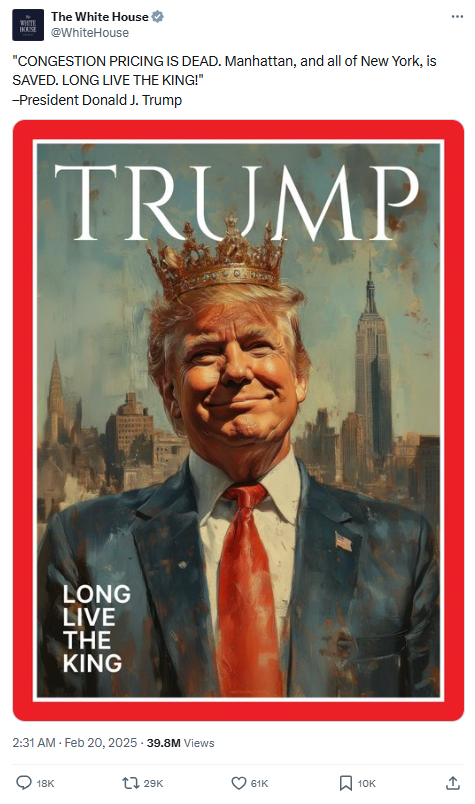
Remember this post that the White House did last year?

Why Greenland Was the Opening Move

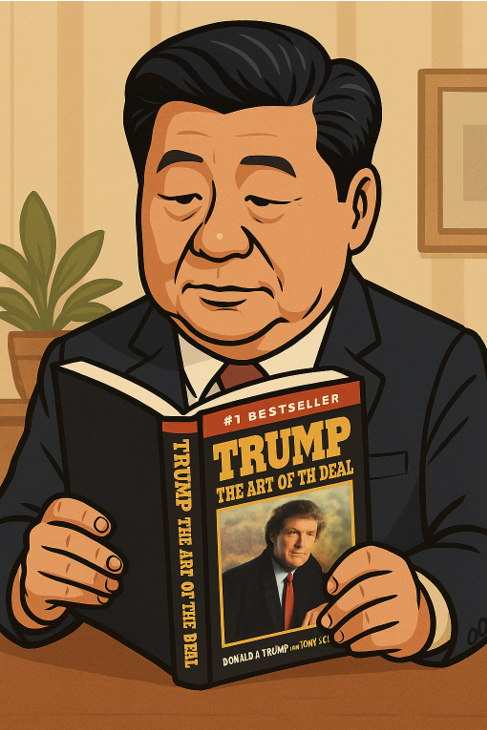
In 2019, the world laughed when Trump suggested the U.S. buy Greenland. But as Trump wrote in The Art of the Deal, “Location is everything.”

Maybe we should brush up and read the “Art of the Deal”. Cover image is from our blog – “Art of the Deal” Tops Amazon as Tariffs Stirs Comedy and Chaos


Even though the Greenland talks have now subsided into a formal framework for cooperation, the underlying intent of the original ‘buy’ offer to secure resources remain.

Greenland isn’t just ice; it is a fortress of strategic necessity:

  • Critical Minerals: The island holds massive reserves of rare earth minerals (estimated at 1.5 million metric tons, with some deposits reaching 28 million metric tons). These are the vitamins of modern defense and technology, and China currently dominates roughly 90% of global processing.
  • Arctic Shipping Lanes: As sea ice declines, the Northern Sea Route offers up to 40% savings in time and cost for shipping between Asia and Europe. Controlling this “Polar Silk Road” is a generational prize.
  • The AI Power Race: As we explored in our AI Curveball blog, the bottleneck for AI is no longer just code; it is energy and cooling. Greenland’s massive hydro potential and Arctic climate make it a “sovereign heat sink” for the data centers of the future.


This isn’t real estate speculation; it is Monroe Doctrine 2.0. It is a move to secure the Western Hemisphere’s physical supply chain. As we noted in The Price of Sovereignty, in 2026, safety isn’t measured just in missiles, but in who owns the warehouses of food, fuel, and the resources needed to win the AI race.

The “Board of Peace” vs. The Board of Reality

Trump’s “Board of Peace” pitch fits this empire-building mold: a transactional attempt to manage global stability from a position of top-down strength. But the board has changed since 1945.

We aren’t in a unipolar world anymore. As highlighted in our report on De-dollarization, nations like the BRICS bloc are actively building parallel financial rails to bypass the dollar. They’ve seen the U.S. weaponize the dollar against Russia, and they are opting out of the game entirely. You can set up a “Board of Peace,” but it’s hard to play when half the grandmasters are leaving the tournament to start their own league.

The Bill for the Empire

This brings us to the most uncomfortable truth. Empires are expensive.

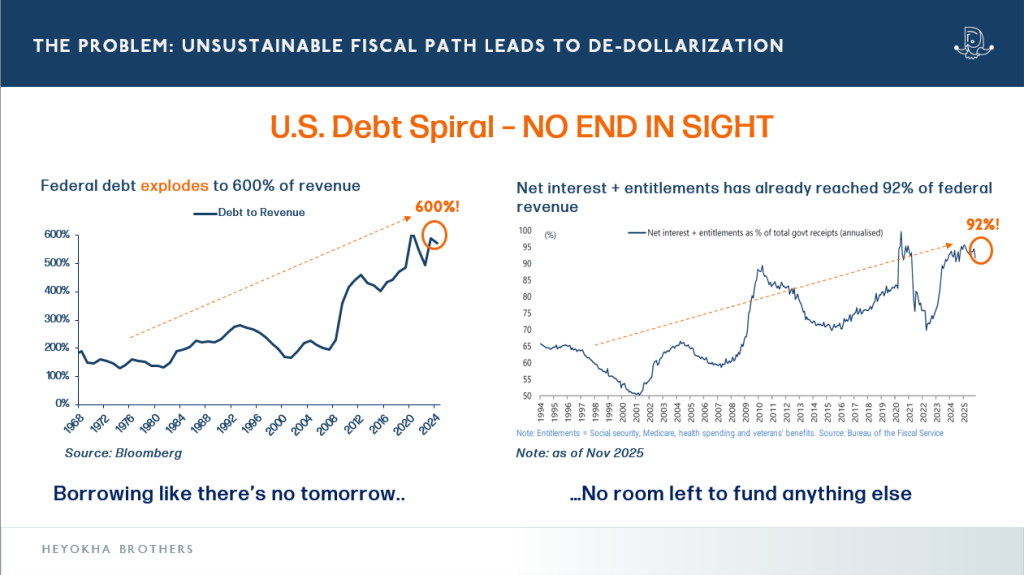
While the strategy to secure hard assets like Greenland makes geopolitical sense, the balance sheet tells a different story. In FY 2025, the U.S. federal government spent $970 billion on net interest alone. This exceeded national defense spending ($917 billion). When you combine interest payments with mandatory entitlements (Social Security and Medicare), these costs are essentially consuming the vast majority of federal revenue, around 92%.

How is this sustainable?


Think about that. Nearly every dollar the government collects is swallowed up just to service past debt and keep the lights on for mandatory programs. That leaves almost nothing for defense, infrastructure, or buying massive islands. The U.S. is effectively trying to finance a 19th-century style expansion with a balance sheet that looks like a distressed tech startup.

The Investor Takeaway

We have been writing about this shift for years: from our Gold: The Return of Real Money report predicting the flight to hard assets, to our analysis of the debt spiral from the report. The “Trump Trade” isn’t just about lower taxes; it’s about a turbulent transition from a paper-based global order to one backed by hard resources.

When a superpower tries to reassert control while drowning in debt, the currency is usually the casualty. That is why central banks are hoarding gold at record rates. They know the cost of maintaining this empire is likely to be paid in inflation.

The End Game

As the U.S. races to lock down Arctic shipping lanes and mineral deposits, the picture is becoming clear. Trump may be playing a winning hand on the geopolitical chessboard, but the financial clock is ticking louder than anyone admits.

The real question isn’t whether America is building a new empire: it’s whether the American people realize they are financing one they can no longer afford.


Tara Mulia

For more blogs like these, subscribe to our newsletter here!


Admin heyokha


Share


The Opening: A Musical Flop and a Geopolitical Stage

In 1986, ABBA’s Benny Andersson and Björn Ulvaeus teamed up to write Chess, a musical about the Cold War where the board served as a metaphor for superpower rivalry. Despite the catchy score, the production was a flop. It struggled to balance human drama with the cold machinery of global politics.

Caught the Broadway production in December. Full house. It seems American audiences can feel the geopolitical temperature rising. Suddenly, this musical feels less like history and more like a preview

Fast forward to 2026, and we are watching a new production on the global stage that is anything but a song and dance. President Trump has officially signed the charter for the “Board of Peace” at Davos. While it was initially pitched as a mechanism for Gaza’s reconstruction, the charter signed this January reveals a much broader mandate: to “promote stability” and resolve international conflicts.

While the name sounds diplomatic, the mechanics are novel. Permanent membership on the board reportedly requires a $1 billion contribution, and the charter grants “Chairman Trump” sweeping authority, including veto power over resolutions. It is a bold attempt to create a “nimble” alternative to the United Nations. However, in a game of chess, you need players willing to sit at the table. While over 20 nations like Saudi Arabia, Turkey, and Indonesia have signed on, heavyweights like France and Germany have declined, citing concerns over undermining the UN. Right now, much of the world is busy building their own boards.

The Thesis: The Empire Strikes Back

It is easy to dismiss Trump’s headlines: buying Greenland, slapping 25% tariffs on neighbors, proposing grand peace boards: as eccentric noise. But what if they aren’t random at all?

At Heyokha, we see these moves as a coherent strategy to build a resource-based American empire in a de-globalizing world. Trump isn’t just making deals; he is attempting to lock down the hard assets: land, energy, and minerals: required to survive the end of the “just-in-time” global order.

Remember this post that the White House did last year?

Why Greenland Was the Opening Move

In 2019, the world laughed when Trump suggested the U.S. buy Greenland. But as Trump wrote in The Art of the Deal, “Location is everything.”

Maybe we should brush up and read the “Art of the Deal”. Cover image is from our blog – “Art of the Deal” Tops Amazon as Tariffs Stirs Comedy and Chaos


Even though the Greenland talks have now subsided into a formal framework for cooperation, the underlying intent of the original ‘buy’ offer to secure resources remain.

Greenland isn’t just ice; it is a fortress of strategic necessity:

  • Critical Minerals: The island holds massive reserves of rare earth minerals (estimated at 1.5 million metric tons, with some deposits reaching 28 million metric tons). These are the vitamins of modern defense and technology, and China currently dominates roughly 90% of global processing.
  • Arctic Shipping Lanes: As sea ice declines, the Northern Sea Route offers up to 40% savings in time and cost for shipping between Asia and Europe. Controlling this “Polar Silk Road” is a generational prize.
  • The AI Power Race: As we explored in our AI Curveball blog, the bottleneck for AI is no longer just code; it is energy and cooling. Greenland’s massive hydro potential and Arctic climate make it a “sovereign heat sink” for the data centers of the future.


This isn’t real estate speculation; it is Monroe Doctrine 2.0. It is a move to secure the Western Hemisphere’s physical supply chain. As we noted in The Price of Sovereignty, in 2026, safety isn’t measured just in missiles, but in who owns the warehouses of food, fuel, and the resources needed to win the AI race.

The “Board of Peace” vs. The Board of Reality

Trump’s “Board of Peace” pitch fits this empire-building mold: a transactional attempt to manage global stability from a position of top-down strength. But the board has changed since 1945.

We aren’t in a unipolar world anymore. As highlighted in our report on De-dollarization, nations like the BRICS bloc are actively building parallel financial rails to bypass the dollar. They’ve seen the U.S. weaponize the dollar against Russia, and they are opting out of the game entirely. You can set up a “Board of Peace,” but it’s hard to play when half the grandmasters are leaving the tournament to start their own league.

The Bill for the Empire

This brings us to the most uncomfortable truth. Empires are expensive.

While the strategy to secure hard assets like Greenland makes geopolitical sense, the balance sheet tells a different story. In FY 2025, the U.S. federal government spent $970 billion on net interest alone. This exceeded national defense spending ($917 billion). When you combine interest payments with mandatory entitlements (Social Security and Medicare), these costs are essentially consuming the vast majority of federal revenue, around 92%.

How is this sustainable?


Think about that. Nearly every dollar the government collects is swallowed up just to service past debt and keep the lights on for mandatory programs. That leaves almost nothing for defense, infrastructure, or buying massive islands. The U.S. is effectively trying to finance a 19th-century style expansion with a balance sheet that looks like a distressed tech startup.

The Investor Takeaway

We have been writing about this shift for years: from our Gold: The Return of Real Money report predicting the flight to hard assets, to our analysis of the debt spiral from the report. The “Trump Trade” isn’t just about lower taxes; it’s about a turbulent transition from a paper-based global order to one backed by hard resources.

When a superpower tries to reassert control while drowning in debt, the currency is usually the casualty. That is why central banks are hoarding gold at record rates. They know the cost of maintaining this empire is likely to be paid in inflation.

The End Game

As the U.S. races to lock down Arctic shipping lanes and mineral deposits, the picture is becoming clear. Trump may be playing a winning hand on the geopolitical chessboard, but the financial clock is ticking louder than anyone admits.

The real question isn’t whether America is building a new empire: it’s whether the American people realize they are financing one they can no longer afford.


Tara Mulia

For more blogs like these, subscribe to our newsletter here!


Admin heyokha


Share


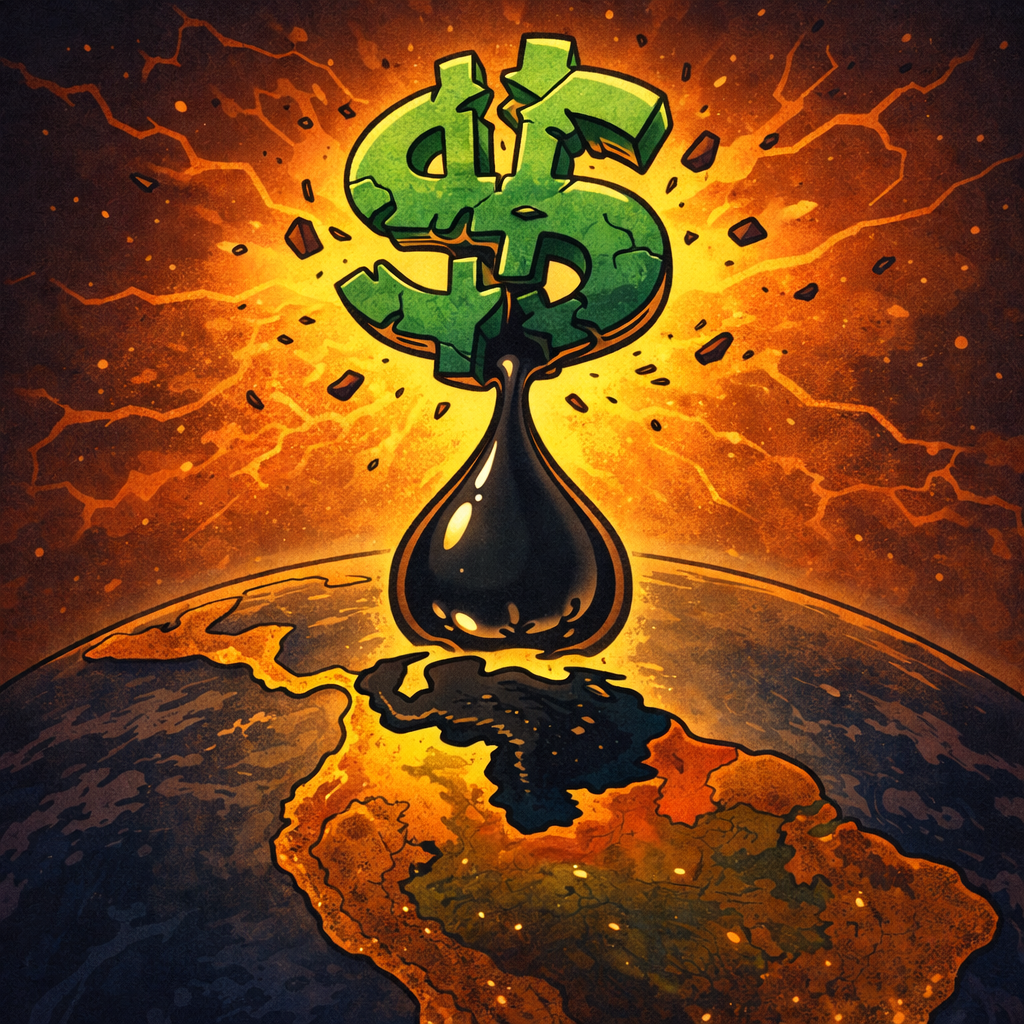
Something big happened. And no, we’re not talking about the dramatic military footage from Caracas. That was the trailer. The real story is about systems: who runs them, who controls access, and how trust in those systems is unraveling in real-time.

For decades, the petrodollar system anchored U.S. financial dominance. It was never about just oil, it was about trust. Trust that global trade would run through U.S. dollars. Trust that national borders would be respected. Trust that rule of law, not rule of force, governed the world’s financial plumbing.

That trust just took a direct hit.

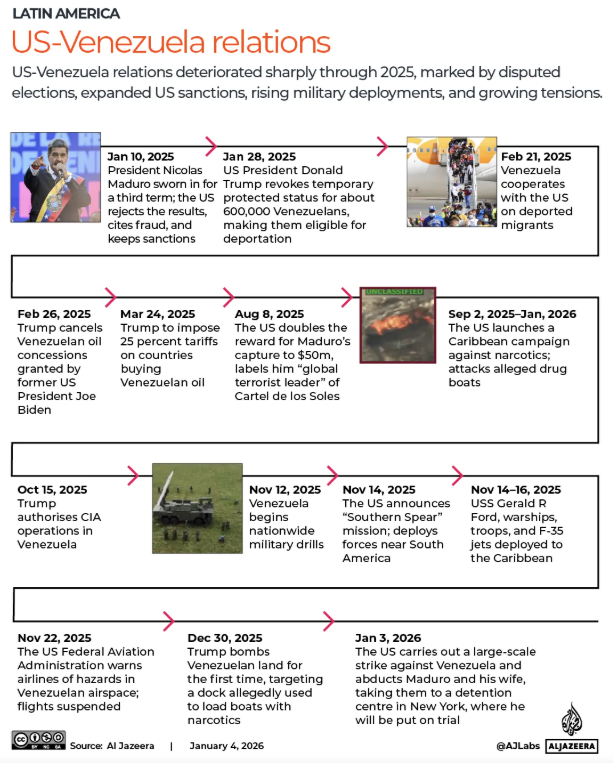
If you need a refresher of the events that transpired

Source: Al Jazeera

Venezuela Was Never About Venezuela

Let’s get one thing out of the way: Venezuela’s importance isn’t about what it produces now, it’s about what it could produce and who controls it.

Officially, Venezuela sits on the world’s largest proven oil reserves, an estimated 300 billion barrels. To put that in perspective, that is more than Saudi Arabia that holds an estimate of 267 billion barrels. Yet, the nation’s actual output has cratered:

  • Peak (Early 2000s): ~3 million barrels per day (bpd).
  • Today: Struggling to stay above 800,000–900,000 bpd.

Infrastructure is decaying. Expertise has fled. Most foreign players, save Chevron, were kicked out long ago. And yet, the U.S. is back.

Why?

Because even if Venezuela’s current output is minimal, it possesses the specific “heavy sour” crude needed by U.S. Gulf Coast refineries to optimize margins. However, the narrative that the U.S. can simply “turn on the taps” is a logistical fantasy.

The Dollar’s Soft Power Turns Hard

For years, the game plan was “isolation through paperwork.” Washington used sanctions to lock Venezuela out of Western banks and U.S. capital markets. It didn’t work.

Caracas simply built a “parallel plumbing” system to bypass the dollar. They rerouted trade through shadow fleets and leaned on Beijing for survival.

The China Play: Between 2007 and 2015, China funneled $60 billion into Venezuela. But Beijing isn’t a charity—they’ve spent the last decade quietly de-risking. By halting new loans and focusing on “extraction-for-repayment,” they have recouped roughly $50 billion, leaving a manageable $10–12 billion on the books.

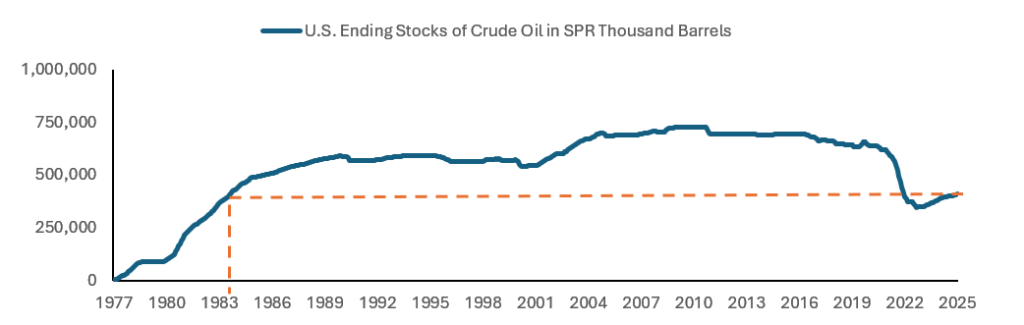
This operation was never about a “war for oil” in the traditional sense. While the U.S. Strategic Petroleum Reserve (SPR) is low (currently holding 413 million barrels, near 1980s benchmarks) the U.S. could be worried about a war higher than just oil.

U.S emergency stockpile is as low as it was in the 1980s. This gives the U.S. less flexibility in a crisis and weaker leverage against OPEC+ adversaries

Source: U.S. Energy Information Administration


This is a war for primacy. If a nation in the Western Hemisphere can successfully decouple from the dollar system using Chinese financial rails, the precedent is dangerous.

So, Washington pulled the emergency brake.

Maduro was taken. The military operation was swift and surgical, closer to a “decapitation strike” rather than a full invasion. But what followed wasn’t a puppet installation, but a bizarre cohabitation. With Delcy Rodríguez now sworn in as Acting President, the U.S. has proven it can remove a leader, but it hasn’t proven it can easily govern the aftermath.

Empire by Other Means

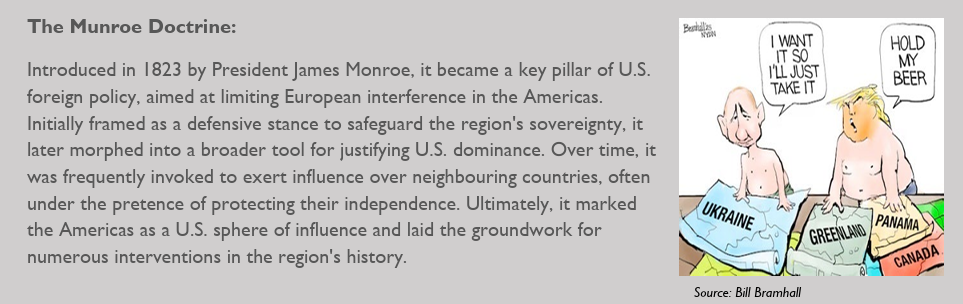
This is not a new doctrine—it’s the Monroe Doctrine, version 2.0.

We’ve talked about the Munroe Doctrine before in our Gold Report, here’s a sneak peak

But Venezuela is not a “banana republic” of the 1950s; it is a fragmented state with 20–30 million people and over 20 different armed groups controlling the interior.

And here’s the kicker: even if you stabilize the country, reactivating Venezuela’s oil machine will require more than $100 billion in capex and over a decade of patient rebuilding. That is a staggering sum for a nation that is effectively insolvent.

To put the scale of this challenge in perspective, consider the mountain of debt already on the books:

  • Total External Debt: Estimated between $150–$170 billion.
  • Economic Output: The International Monetary Fund (IMF) estimates Venezuela’s nominal GDP at about $82.8 billion for 2025.
  • The Debt Trap: This implies a debt-to-GDP ratio of between 180%–200%.

In short: the cost to simply fix the oil fields is larger than the country’s entire annual economic output, and the debt they already owe is double that. This isn’t just a recovery project; it’s a multi-generational financial restructuring.

A Catalyst for Hard Assets

But what does all of this mean for investors?

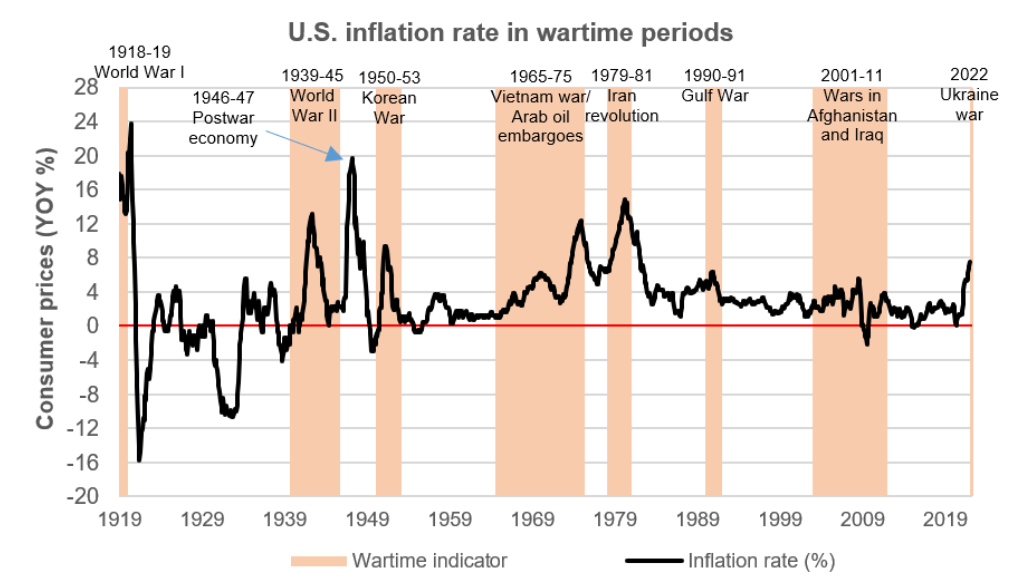
Wars are inflationary. Always have been. Resources are hoarded. Supply chains are weaponized. Deficits explode. And trust, especially trust in the currency used to finance these deteriorates.

War has always been inflationary

Source: RSM US

At Heyokha, we’ve been writing about this for years:

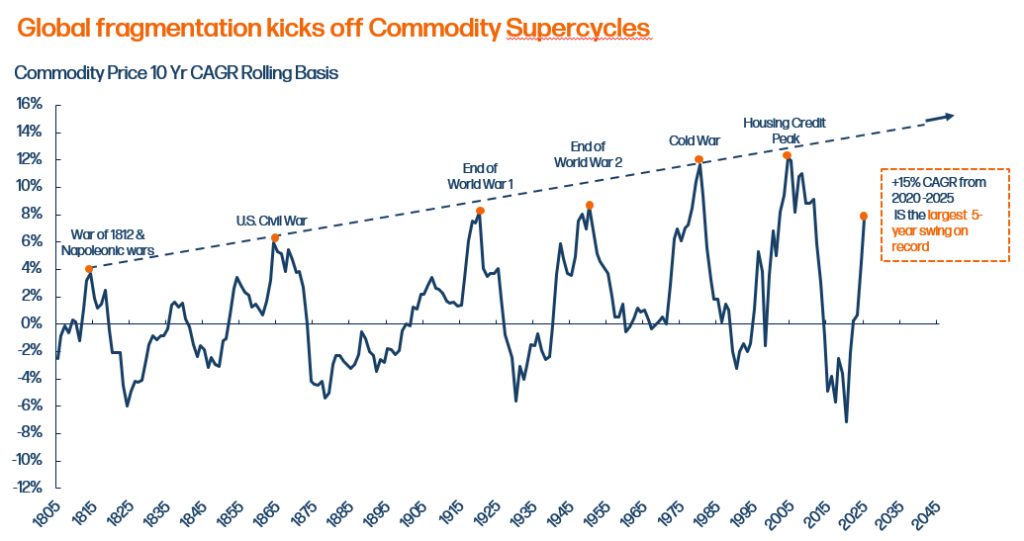
War also kicks off commodity prices to surge

Venezuela fits squarely into this narrative.

The show of force may have delivered a short-term win. But the long-term effect is clear: if you’re a resource-rich nation thinking of pricing oil or metals outside the dollar, this operation was a warning. The message? Don’t even try.

But the world is watching and taking notes. BRICS members are already settling trades in local currencies. China’s Cross-Border Interbank Payment System (CIPS) now links over 1,400 financial institutions across 109 countries. Gold purchases by central banks hit multi-decade highs last year.

In other words: trust is shifting.

Final Thoughts: A Wake-Up Call for the Financial System

The aircraft have left Caracas. Maduro is in New York facing trial. But the damage to the “rules-based order” is permanent.

This wasn’t just a regime change—it was a message to the rest of the world: U.S. access to resources comes first. Financial autonomy comes second.

That message will echo far beyond Latin America.

It will accelerate the move away from dollar-based systems. It will deepen skepticism of U.S. financial assets. And it will push more capital into real stores of value—like gold, silver, and the infrastructure tied to energy sovereignty.

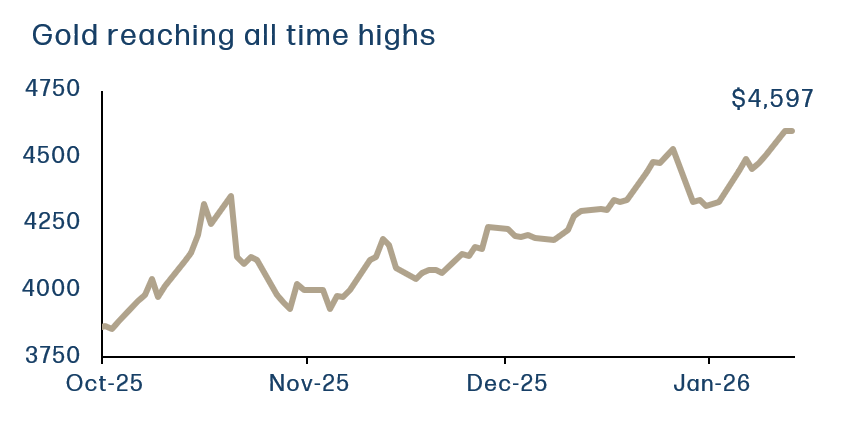
Up 73% since October 2025. How much higher can it go with increased political uncertainty?

At Heyokha, we see this moment not as an isolated geopolitical event, but as part of the broader endgame of the fiat era. When trust erodes, when power shifts, when the military becomes the backstop of monetary policy—it’s time to think hard about what you own.

Gold isn’t just a hedge anymore. It’s a protest vote. A way to opt out of systems that break their own rules. And the story of Venezuela might be the loudest signal yet.


Tara Mulia

For more blogs like these, subscribe to our newsletter here!


Admin heyokha


Share
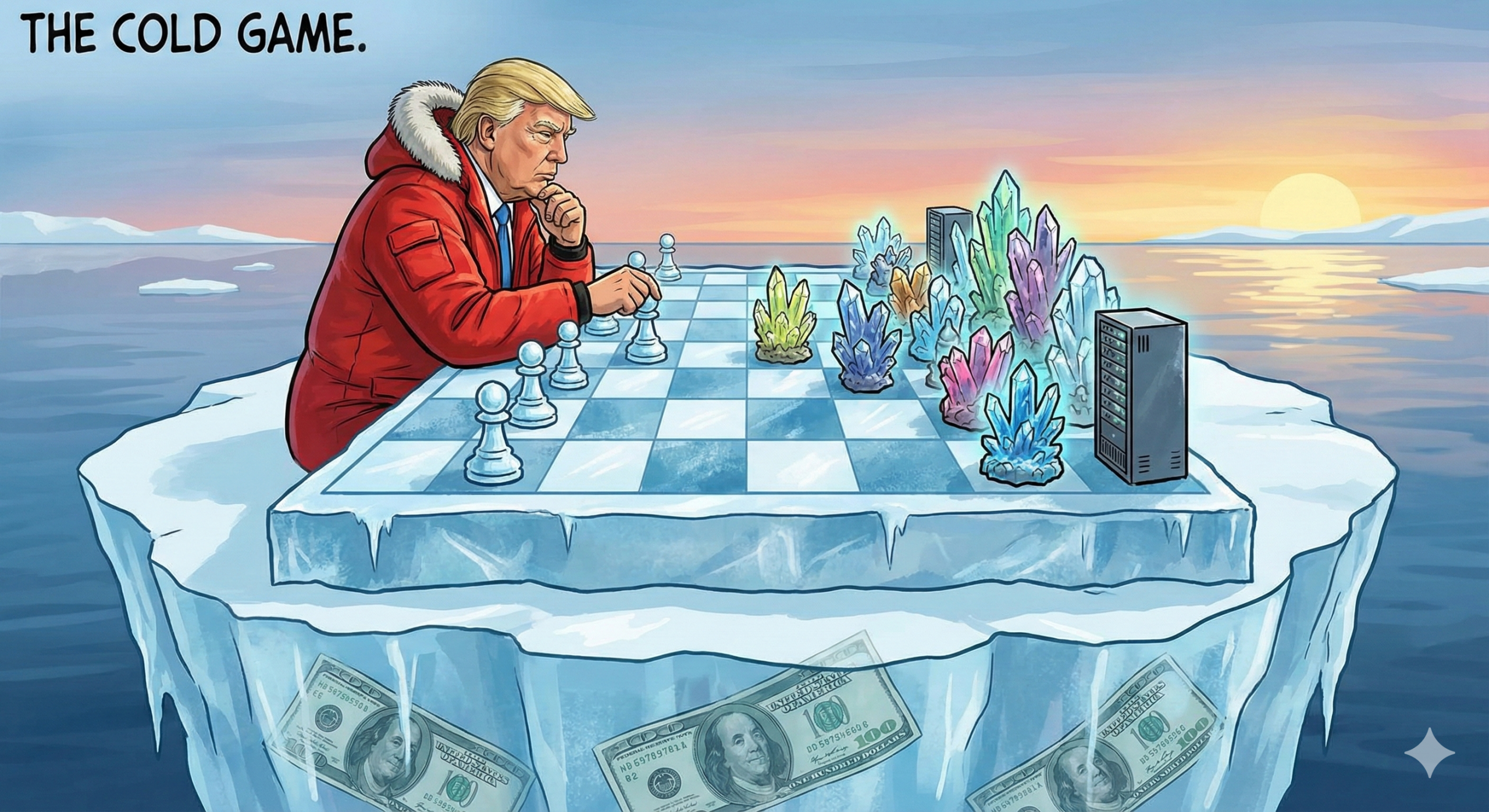


Something big happened. And no, we’re not talking about the dramatic military footage from Caracas. That was the trailer. The real story is about systems: who runs them, who controls access, and how trust in those systems is unraveling in real-time.

For decades, the petrodollar system anchored U.S. financial dominance. It was never about just oil, it was about trust. Trust that global trade would run through U.S. dollars. Trust that national borders would be respected. Trust that rule of law, not rule of force, governed the world’s financial plumbing.

That trust just took a direct hit.

If you need a refresher of the events that transpired

Source: Al Jazeera

Venezuela Was Never About Venezuela

Let’s get one thing out of the way: Venezuela’s importance isn’t about what it produces now, it’s about what it could produce and who controls it.

Officially, Venezuela sits on the world’s largest proven oil reserves, an estimated 300 billion barrels. To put that in perspective, that is more than Saudi Arabia that holds an estimate of 267 billion barrels. Yet, the nation’s actual output has cratered:

  • Peak (Early 2000s): ~3 million barrels per day (bpd).
  • Today: Struggling to stay above 800,000–900,000 bpd.

Infrastructure is decaying. Expertise has fled. Most foreign players, save Chevron, were kicked out long ago. And yet, the U.S. is back.

Why?

Because even if Venezuela’s current output is minimal, it possesses the specific “heavy sour” crude needed by U.S. Gulf Coast refineries to optimize margins. However, the narrative that the U.S. can simply “turn on the taps” is a logistical fantasy.

The Dollar’s Soft Power Turns Hard

For years, the game plan was “isolation through paperwork.” Washington used sanctions to lock Venezuela out of Western banks and U.S. capital markets. It didn’t work.

Caracas simply built a “parallel plumbing” system to bypass the dollar. They rerouted trade through shadow fleets and leaned on Beijing for survival.

The China Play: Between 2007 and 2015, China funneled $60 billion into Venezuela. But Beijing isn’t a charity—they’ve spent the last decade quietly de-risking. By halting new loans and focusing on “extraction-for-repayment,” they have recouped roughly $50 billion, leaving a manageable $10–12 billion on the books.

This operation was never about a “war for oil” in the traditional sense. While the U.S. Strategic Petroleum Reserve (SPR) is low (currently holding 413 million barrels, near 1980s benchmarks) the U.S. could be worried about a war higher than just oil.

U.S emergency stockpile is as low as it was in the 1980s. This gives the U.S. less flexibility in a crisis and weaker leverage against OPEC+ adversaries

Source: U.S. Energy Information Administration


This is a war for primacy. If a nation in the Western Hemisphere can successfully decouple from the dollar system using Chinese financial rails, the precedent is dangerous.

So, Washington pulled the emergency brake.

Maduro was taken. The military operation was swift and surgical, closer to a “decapitation strike” rather than a full invasion. But what followed wasn’t a puppet installation, but a bizarre cohabitation. With Delcy Rodríguez now sworn in as Acting President, the U.S. has proven it can remove a leader, but it hasn’t proven it can easily govern the aftermath.

Empire by Other Means

This is not a new doctrine—it’s the Monroe Doctrine, version 2.0.

We’ve talked about the Munroe Doctrine before in our Gold Report, here’s a sneak peak

But Venezuela is not a “banana republic” of the 1950s; it is a fragmented state with 20–30 million people and over 20 different armed groups controlling the interior.

And here’s the kicker: even if you stabilize the country, reactivating Venezuela’s oil machine will require more than $100 billion in capex and over a decade of patient rebuilding. That is a staggering sum for a nation that is effectively insolvent.

To put the scale of this challenge in perspective, consider the mountain of debt already on the books:

  • Total External Debt: Estimated between $150–$170 billion.
  • Economic Output: The International Monetary Fund (IMF) estimates Venezuela’s nominal GDP at about $82.8 billion for 2025.
  • The Debt Trap: This implies a debt-to-GDP ratio of between 180%–200%.

In short: the cost to simply fix the oil fields is larger than the country’s entire annual economic output, and the debt they already owe is double that. This isn’t just a recovery project; it’s a multi-generational financial restructuring.

A Catalyst for Hard Assets

But what does all of this mean for investors?

Wars are inflationary. Always have been. Resources are hoarded. Supply chains are weaponized. Deficits explode. And trust, especially trust in the currency used to finance these deteriorates.

War has always been inflationary

Source: RSM US

At Heyokha, we’ve been writing about this for years:

War also kicks off commodity prices to surge

Venezuela fits squarely into this narrative.

The show of force may have delivered a short-term win. But the long-term effect is clear: if you’re a resource-rich nation thinking of pricing oil or metals outside the dollar, this operation was a warning. The message? Don’t even try.

But the world is watching and taking notes. BRICS members are already settling trades in local currencies. China’s Cross-Border Interbank Payment System (CIPS) now links over 1,400 financial institutions across 109 countries. Gold purchases by central banks hit multi-decade highs last year.

In other words: trust is shifting.

Final Thoughts: A Wake-Up Call for the Financial System

The aircraft have left Caracas. Maduro is in New York facing trial. But the damage to the “rules-based order” is permanent.

This wasn’t just a regime change—it was a message to the rest of the world: U.S. access to resources comes first. Financial autonomy comes second.

That message will echo far beyond Latin America.

It will accelerate the move away from dollar-based systems. It will deepen skepticism of U.S. financial assets. And it will push more capital into real stores of value—like gold, silver, and the infrastructure tied to energy sovereignty.

Up 73% since October 2025. How much higher can it go with increased political uncertainty?

At Heyokha, we see this moment not as an isolated geopolitical event, but as part of the broader endgame of the fiat era. When trust erodes, when power shifts, when the military becomes the backstop of monetary policy—it’s time to think hard about what you own.

Gold isn’t just a hedge anymore. It’s a protest vote. A way to opt out of systems that break their own rules. And the story of Venezuela might be the loudest signal yet.


Tara Mulia

For more blogs like these, subscribe to our newsletter here!


Admin heyokha


Share



Q3 2025 marked the return of uncomfortable trade-offs.

The Fed eased into a weakening labour market without defeating inflation. AI dominated returns but exposed severe physical bottlenecks. Gold, silver, and copper reflected growing anxiety over monetary credibility and real-world scarcity.

As the U.S. wrestled with policy limits, China quietly rebuilt equity confidence through a structural “slow bull,” while Indonesia leaned into domestic liquidity expansion.

This quarter reaffirmed our positioning: precious metals, real assets, and pricing power equities — themes designed not just to perform, but to endure.


Admin heyokha


Share


Q3 2025 marked the return of uncomfortable trade-offs.

The Fed eased into a weakening labour market without defeating inflation. AI dominated returns but exposed severe physical bottlenecks. Gold, silver, and copper reflected growing anxiety over monetary credibility and real-world scarcity.

As the U.S. wrestled with policy limits, China quietly rebuilt equity confidence through a structural “slow bull,” while Indonesia leaned into domestic liquidity expansion.

This quarter reaffirmed our positioning: precious metals, real assets, and pricing power equities — themes designed not just to perform, but to endure.


Admin heyokha


Share


Stay Connected with Heyokha

Sign up to receive insights, updates, and perspectives directly from Heyokha

Stay Connected with Heyokha

Sign up to receive insights, updates, and perspectives directly from Heyokha

Heyokha Footer Logo

We drive our mission with an exceptional culture through applying a growth mindset where holistic and on the ground research is at our core.

Help
×

Terms & Conditions

You must read the following information before proceeding. By accessing this website and any pages thereof, you acknowledge that you have read the following information and accept the terms and conditions set out below and agree to be bound by such terms and conditions. If you do not agree to such terms and conditions, please do not access this website or any pages thereof.

The website has been prepared by Heyokha Brothers Limited and is solely intended for informational purposes and should not be construed as an inducement to purchase or sell any security, product, service, or investment. The Site does not solicit an offer to buy or sell any financial instrument or enter into any agreement. It is important to note that the opinions expressed on the Site are not considered investment advice, and it is recommended that individuals seek independent advice as needed to address their specific objectives, financial situation, or needs. It is the responsibility of the persons who access this website to observe all applicable laws and regulations.

The Site offers general information exclusively and does not consider the individual circumstances of any person. The data, opinions, and estimates presented on the Site are current as of the publication date and are subject to changes without notice. Additionally, it is possible that such information may become obsolete with time.

Intended Users

The content presented on this website is exclusively intended for authorized intermediaries and qualified investors within Hong Kong, such as institutional investors, professional investors, and accredited investors (as defined under the SFO). It is not intended for retail investors or individuals located outside of Hong Kong.

The products and services mentioned on this website may or may not be authorized or registered for distribution in a particular jurisdiction and may not be suitable for all investor types. It is important to note that this website is not intended to constitute an offer or solicitation, nor is it directed toward individuals if the provider of the information is prohibited by any law of any jurisdiction from making the information available. Moreover, the website is not intended for any use that would violate local laws or regulations. The provider of the information is not permitted to promote any products or services mentioned on this website in jurisdictions where such promotion would be prohibited.

If you are not a qualified investor or licensed intermediary in Hong Kong, you should not proceed any further.

No Investment Advice

The information provided on this Website is for informational purposes only and should not be considered as investment advice or a recommendation to buy, sell, hold, or transact in any investment. It is strongly recommended that individuals seek professional investment advice before making any investment decisions.

The information presented on this Website does not consider the investment objectives, specific needs, or financial situations of any investor. It is important to note that nothing on this Website is intended to constitute financial, legal, accounting, or tax advice.

Before making any investment decision, individuals should carefully consider whether an investment aligns with their investment objectives, specific needs, and financial situation. This should also include informing oneself of any potential tax implications, legal requirements, foreign exchange restrictions, or exchange control requirements that may be relevant to an investment based on the laws of one’s citizenship, residence, or domicile. If there is any doubt regarding the information on this Website, it is recommended that individuals seek independent professional financial advice.

It is important to note that any opinion, comment, article, financial analysis, market forecast, market commentary, or other information published on the Website is not binding on Heyokha or its affiliates, and they are not responsible for the information, opinions, or ideas presented.

Obligations and Resposibilities of Users

Users are solely responsible for protecting and backing up their data and equipment, as well as taking reasonable precautions against any computer virus or other destructive elements. Additionally, users must ensure that their access to the Site is adequately secured against unauthorized access.

Users are prohibited from using the Site for any unlawful, defamatory, offensive, abusive, indecent, menacing, or threatening purposes, or in any way that infringes upon intellectual property rights or confidentiality obligations. Furthermore, users may not use the Site to cause annoyance, inconvenience, or anxiety to others, or in any way that violates any applicable laws or regulations.

Users must comply with any terms notified to them by third-party suppliers of data or services to the Site. This may include entering into a direct agreement with such third parties in respect of their use of the dat

Third-Party Content

This website may contain Third Party Content or links to websites maintained by third parties that are not affiliated with Heyokha. Heyokha does not participate in the preparation, adoption, or editing of such third-party materials and does not endorse or approve such content, either explicitly or implicitly. Any opinions or recommendations expressed on third party materials are solely those of the independent providers and not of Heyokha. Heyokha is not responsible for any errors or omissions relating to specific information provided by any third party.

Although Heyokha aims to provide accurate and timely information to users, neither Heyokha nor the Third-Party Content providers guarantee on the accuracy, timeliness, completeness, usefulness, or any other aspect of the information presented. Heyokha is not responsible or liable for any content, including advertising, products, or other materials on or available from third party sites. Users access and use Third Party content is at their own risk, and it is provided for informational purposes only. Both Heyokha and the Third-Party shall not be liable for any loss or damage arising from users’ reliance upon such information.

Intellectual Property Rights

The content of this website is subject to copyright and other intellectual property laws. All trademarks, service marks, logos, and brand features displayed on the website are owned by their respective owners, except as explicitly noted. Users may use the information on this website and reproduce it for personal reference only. However, reproduction, distribution, transmission, incorporation in any other database, document, or material, and sale or distribution of any part of the contents of the website is strictly prohibited. Users may download or print individual sections of the website for personal use and information only, provided they are legally entitled to access the material and retain all copyright and other proprietary notices.

Any unauthorized use of the content, trademarks, service marks, or logos displayed on the website may violate copyright, trademark, or other intellectual property laws, as well as laws of privacy and publicity and communications. Any reference or link to any specific commercial product, process, or service by trade name, trademark, manufacturer, or otherwise, does not necessarily constitute or imply its endorsement, recommendation, or favouring by our company.

We provide such references or links solely for the convenience of our users and to provide additional information. Our company is not responsible for the accuracy, legality, or content of any external website or resource linked to or referenced from our website. Users are solely responsible for complying with the terms and conditions of any external websites or resources.

Cookies

In order to enhance user experience and simplify future visits, this website may utilize cookies to track your activity. However, if you do not want to store cookies on your device, you can disable them by adjusting your browser’s security settings.

Data Privacy

Please read our Privacy Statement before providing Heyokha with any personal information on this website. By providing any personal information on this website, you will be deemed to have read and accepted our Privacy Statement.

Use of Website

The information contained on the website is accurate only as of the date of publication and does not constitute investment advice or recommendations. While certain tools available on the website may provide general investment or financial analyses based upon personalized input, such results are for information purposes only, and users should refer to the assumptions and limitations relevant to the use of such tools as set out on the website. Users are solely responsible for determining whether any investment, security or strategy, or any other product or service is appropriate or suitable for them based on their investment objectives and personal and financial situation. Users should consult their independent professional advisers if they have any questions. Any person considering an investment should seek independent advice on the suitability or otherwise of the particular investment.

Disclaimer of Liability Heyokha makes no warranty as to the accuracy, completeness, security, and confidentiality of information available through the website. Heyokha, its affiliates, directors, officers, or employees accept no liability for any errors or omissions relating to information available through the website or for any damages, losses or expenses arising in connection with the website, whether direct or indirect, arising from the use of the website or its contents. Heyokha also reserves the right to modify, suspend, or discontinue the website at any time without notice. Heyokha shall not be liable for any such modification, suspension, or discontinuance.

×

Data Privacy Terms and Conditions

Personal Information Collection Statement:

Pursuant to the Personal Data (Privacy) Ordinance (the ‘Ordinance’), Heyokha Brothers Limited is fully committed to safeguarding the privacy and security of personal information in compliance with all relevant laws and regulations. This statement outlines how we collect, use, and protect personal information provided to us.

Collection of Personal Information:

We collect and maintain personal information, in a manner consistent with all relevant laws and regulations. We take necessary measures to ensure that personal information is correct and up to date. Personal information will only be used for the purpose of utilization and will not be disclosed to third parties (except our related parties e.g.: Administrators) without consent from the individual, except for justifiable grounds as required by laws and regulations.

We may collect various types of personal data from or about you, including:

  • Your name
  • Your user names and passwords
  • Contact information, including address, email address and/or telephone number
  • Information relating to your engagement with material that we publish or otherwise provide to you
  • Records of our interactions with you, including any messages you send us, your comments and questions and any other information you choose to provide.

The Company may automatically collect information about you from computer or internet browser through the use of cookies, pixel tags, and other similar technologies to enhance the user experience on its websites. Third parties may be used to collect personal data and information indirectly through monitoring activities conducted by the Company or on its behalf.

Company does not knowingly collect personal data from anyone under the age of 18 and does not seek to collect or process sensitive information unless required or permitted by law and with express consent.

Uses of your Personal Data:

We may use your personal data for the purposes it was provided and in connection with our services as described below:

  • Provide products/services or info as requested or expected.
  • Fulfill agreements and facilitate business dealings.
  • Manage relationships, analyse websites and communications, and merge personal data for relevance.
  • Support and improve existing products/services, and plan/develop new ones.
  • Count/recognize website visitors and analyse usage.
  • To comply with and assess compliance with applicable laws, rules and regulations and internal policies and procedures.
  • Use information for any other purpose with consent.

Protection of Personal Information:

We provide thorough training to our officers and employees to prevent the leakage or inappropriate use of personal information and provide information on a need-to-know basis. Managers in charge for controls and inspections are appointed, and appropriate control systems are established to ensure the privacy and security of personal information.

In the event that personal information is provided to an external contractor (e.g.: Administrator), we take responsibility for ensuring that the external contractor has proper systems in place to protect the privacy of personal information.

Third parties disclosure of Personal Information:

Personal information held by us relating to an individual will be kept confidential but may be provided to third parties the following purpose:

  • Comply with applicable laws or legal processes.
  • Investigate and prevent illegal activity, fraud, or violations of terms and conditions.
  • Protect and defend legal rights or defend against legal claims.
  • Facilitate business or asset transactions, such as financing, mergers, acquisitions, or bankruptcy.
  • With our related parties (e.g.: administrators) that are subject to appropriate data protection obligations
  • Representatives, agents or custodians appointed by the client (e.g.: Auditors, accountant)

Retention of Personal Information:

Disclosure, correction and termination of usage shall be carried out upon request of an individual in accordance with relevant laws and regulations.

Personal information collected will be retained for no longer than is necessary for the fulfilment of the purposes for which it was collected as per applicable laws and regulations.

Rights of the Individual:

Under relevant laws and regulations, any individual has the right to request access to any of the personal data that we hold by submitting a written request. Individuals are also entitled to request to correct, cancel or delete any of the personal data we hold if they believe such information is inaccurate, out of date or we no longer have a legitimate interest or lawful justification to retain or process.

×

Disclaimer

Heyokha Brothers Limited is the issuer of this website and holds Type 4 (advising on securities) and Type 9 (asset management) licenses issued by the Securities and Futures Commission in Hong Kong.

The information provided on this website has been prepared solely for licensed intermediaries and qualified investors in Hong Kong, including professional investors, institutional investors, and accredited investors (as defined under the Securities and Futures Ordinance). The information provided on this website is for informational purposes only and should not be construed as investment advice, nor an offer to sell or a solicitation of an offer to buy any security, investment product, or service.

Investment involves risk and investors may lose their entire investment. Investors are advised to seek professional advice before making any investment decisions. Past performance is not indicative of future performance and the value of investments may fluctuate. Please refer to the offering document(s) for
details, including the investment objectives, risk factors, and fees and charges.

Heyokha Brothers Limited reserves the right to amend, update, or remove any information on this website at any time without notice. By accessing and using this website, you agree to be bound by the above terms and conditions.

Heyokha Footer Logo

We drive our mission with an exceptional culture through applying a growth mindset where holistic and on the ground research is at our core.

Publications
Help
×

Thank you for subscribing!

You will now gain access to our latest insights, updates, and carefully selected stories, designed to keep you informed and ahead of the curve.